Hey there, if you’ve ever worked with industrial fluid systems, you’ve definitely crossed paths with ball valves—they’re workhorses for controlling flow of everything from water and oil to chemicals and gas. But here’s the thing: even these tough little workhorses wear down over time, and that’s what we’re talking about today: ball valve erosion. As a ball valve supplier who’s been on the floor, troubleshooting with clients and helping them pick parts that last, I’ve seen way too many projects go sideways because no one planned for this. Let’s break it down like we’re chatting over a coffee, no stuffy engineering jargon overload (unless we absolutely need it). Ball Valve
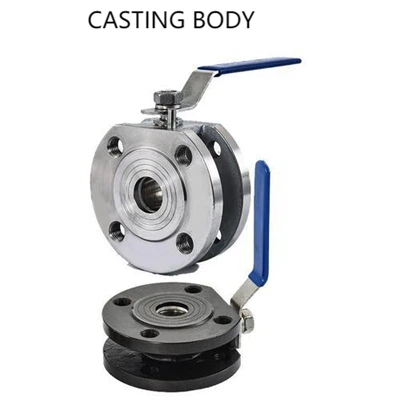
First off, what even is erosion when it comes to a ball valve? Let’s start with the basics. A ball valve’s main job is that hollow, perforated ball inside the body—twist it a quarter turn, and the hole lines up for flow, or turns 90 degrees closed. Erosion is when the material of that ball, the seats that seal around it, or even the valve body itself gets slowly worn away by the stuff flowing through it. It’s not like a sudden crack or a leak—this is a gradual scraping, pitting, or chipping of metal (or whatever the valve’s made of) that happens over time, usually without you noticing until it’s too late.
Wait, let’s make that real. Think of sandblasting a wall, but super slow, with tiny, high-speed particles hitting just the right spot over and over. That’s basically what erosion in a ball valve looks like. Only instead of a wall, it’s the precision-crafted parts of your valve that can’t be scraped even a little—because even a tiny worn spot on the seal means no tight shutoff, and suddenly you’ve got unplanned downtime. I’ve been on a site where a client’s ball valve on a slurry pipeline failed because of erosion—they thought their stainless steel valve was tough enough, until the ball’s inlet edge got worn down so thin it broke mid-shift. Cost them tens of thousands in lost production, just because they didn’t account for this.
Now, what causes it? It’s not one single thing, usually a mix of factors, and as a supplier, I’ve learned to spot the red flags fast. Let’s run through the big ones. First, the fluid itself. If it’s clean water or light oil? Erosion is barely a blip. But if it’s got solids—sand, silt, ore particles, even tiny metal shavings from upstream pipes? That’s the #1 culprit. Those particles get carried through the valve at high speeds, slam into the ball’s edges, the seat seals, or the body’s inlet/outlet ports. The faster the flow, the worse this is—like sticking your hand out a car window at 20 mph vs 70 mph; the wind hits way harder at speed, same idea with particles.
Then there’s the angle of impact. If those particles hit the valve parts straight on, that’s way more damage than glancing blows. I’ve seen a ball valve with the inlet edge worn into a smooth indent, and that’s because the flow was directing particles right at that exact spot for months. Also, the material of the parts matters—soft metals like regular carbon steel wear way faster than harder alloys like chrome or ceramic-coated balls, right? But even hard stuff can erode if the particles are extra tough (like quartz sand, which is super hard).
Wait, another big one that people sleep on: cavitation. That’s a special type of erosion that happens when liquid flows through a restriction (like the ball’s hole when it’s partially open), pressure drops so low that tiny vapor bubbles form, then when the pressure rises again downstream, those bubbles collapse violently. It’s like tiny, constant little explosions hitting the valve parts. I’ve had clients confuse cavitation damage with regular erosion, but once I explained it, they realized their valve was only partially open 24/7, making cavitation way worse. Fixing that (like limiting how much they open the valve, or adding a trim) saved their valve from failing in weeks instead of years.
Now, what does eroded ball valve actually look like, so you can spot it before it’s a disaster? Let’s make this tangible. First, performance changes: you’ll notice the valve doesn’t shut all the way—like, when you twist the handle to closed, you still get a trickle of flow, that’s seal wear from erosion. Then, maybe the handle feels loose when you turn it, or it takes more force than usual— that’s because the ball’s shape is changing a little from wear, so it doesn’t sit as smoothly in the seats. If you take the valve apart, the signs are obvious: the ball’s inlet/outlet edges are rounded or chipped (instead of sharp like a new valve), the seat seals have little pits or gouges, and the valve body’s ports might have smooth, worn areas too. I once had a client send me a photo of a ball—looked like someone had sanded the edges down with a belt sander, and that was after only 6 months of use. Scary stuff.
Why should you care, beyond just a faulty valve? Let’s talk real costs here, because I’m not trying to alarm you, just be straight. Unplanned downtime is the big one—if your valve fails on a production line, you shut down the whole line, which costs way more than just replacing the valve. Then there’s product loss: if you’re pumping valuable chemicals or ore slurry, that leak is product going to waste, not just money down the drain. And safety: if you’re dealing with hazardous materials, a leaking valve can be a big risk for workers, or environmental damage. I had a water treatment client a couple years back—their eroded valve on a chlorine line started leaking, and they had to evacuate a small section of the plant until they swapped it out. All because they skipped upgrading their valve to handle the slurry in the line.
Okay, so what can you do about it? As a ball valve supplier, this is the part I live for—helping clients pick the right valve to avoid erosion, not just replace it. First, match the valve to your fluid. If you’re handling slurry, sand, or any fluid with solid particles, don’t get a standard carbon steel ball valve. Go for hard material coatings—chrome-plated balls, ceramic seats, or even solid alloy balls like Hastelloy or duplex stainless steel. Those are way more resistant to particle impact.
Then, consider the valve’s design. A full-port vs reduced-port valve? Wait, full-port valves have a hole the same size as the pipe, so flow speed is lower, which means less erosion. That’s a big one. Reduced-port valves constrict flow, making particles move faster—more wear. Also, if you’re only going to open the valve partially (which is a common mistake), look for a valve designed for throttling, or even use a different type of valve for throttling (like a globe valve) and use the ball valve just for full open/close—wait, but I sell ball valves, so I’ll add that there are ball valves built for throttling too, just make sure you specify that upfront.
Then, operational tweaks. Don’t leave a ball valve partially open for long periods—if you need to regulate flow, get a valve made for that job, not a standard on/off ball valve. Also, monitor flow speeds—keep them under 10 ft per second for slurries, that’s a sweet spot I’ve found where erosion stays manageable. And do regular inspections—every 3 to 6 months, take the valve apart and check for wear, not just when it fails. That’s way cheaper than emergency replacement.
Wait, let’s bust a common myth here: some people think “all valves erode equally” or “errosion is just part of life”. No, it’s predictable. I’ve got clients who’ve run the same slurry line with our coated ball valves for 5+ years with barely any wear, because we picked the right parts for their specific fluid. The client I mentioned earlier with the sandblasted ball? They went with our ceramic-coated balls after that, and their valves have lasted 3 years now with no issues. That’s the difference.
Another thing to note: erosion isn’t just an industrial problem. I’ve seen it in municipal water systems too, right? Water with sediment moving through old valves, same wear. Just on a smaller scale, but still causing leaks and repairs.
So, to wrap this up: erosion in a ball valve is gradual, material wear caused by high-speed particles, cavitation, or constant flow-related stress. It sneaks up on you, but the signs are there if you know what to look for, and it’s totally preventable with the right valve selection and operational habits.
If you’re dealing with a system where erosion might be a problem, or you’re tired of replacing ball valves every year because they wear out, hit me up. I can walk you through your specific application, help you pick a valve that’ll last way longer, and avoid that costly unplanned downtime. No generic quotes, just real advice from someone who’s worked with these valves in the field, not just behind a desk.
Cryogenic Ball Valve References
- Ball Valve Erosion Mechanisms – Industry Technical Report, Valve Manufacturers Association, 2021
- Fluid Flow and Material Wear in Industrial Valves, Journal of Process Mechanical Engineering, 2019
- Cavitation and Erosion Control for Valves, American Water Works Association, 2020
Wuxi PYNOS Flow-tech Co., Ltd.
As one of the leading ball valve manufacturers and suppliers in China, we offer a wide range of products with superior quality. We warmly welcome you to buy high quality ball valve made in China here from our factory. We also accept customized orders.
Address: Sales Center: 7th Floor, No.19 Qingyuan RD, Wuxi City, Jiangsu Prov., China
E-mail: Info@pynosvalve.com
WebSite: https://www.pynosvalves.com/
