Hey everyone, if you’ve ever worked with high voltage power systems—think big generators, grid tie-ins, or data center backups—you’ve probably heard the term “voltage regulation” thrown around, but when it comes to high voltage load banks, it’s not just some jargon we use to sound smart. Let’s break this down like we would over a coffee at a trade show, no stuffy textbook stuff here, and I’ll tie it all in since we’ve been supplying high voltage load banks for over a decade (yes, that long, I’ve seen a ton of projects come through our doors). High Voltage Load Bank

First, let’s keep it simple: voltage is the pressure that pushes electricity through wires, right? Regulation is how well that pressure stays consistent, no matter how much load is hooked up. For low voltage stuff—like your home outlets, which are 120/240V—voltage regulation is pretty straightforward. But high voltage load banks? That’s 1kV and up, sometimes way higher—we’ve built units for 13.8kV, 25kV, even 34.5kV for substation testing, and regulation here is a whole different beast. It’s not just about keeping voltage steady; it’s about testing if your high voltage power source can hold up under real-world stress without dipping or spiking, which is make-or-break for things like hospitals, mines, or wind farms that can’t afford a power blip.
Let’s back up a sec: what even is a high voltage load bank, anyway? For anyone new, it’s a piece of test equipment that mimics the real electrical load a power system will face. Like, if you just installed a big generator for a data center, you can’t just turn it on and let it sit—you need to test it under the same heavy load it’ll actually carry, and that’s where our load banks come in. They’re designed to dissipate that load as heat (we’ve got air-cooled and water-cooled units for different space needs) and measure how the power source performs. And voltage regulation is one of the key metrics we check when we deliver a unit, because if your load bank can’t keep a steady voltage while applying load, your test results are garbage.
Now, the actual definition for high voltage load bank voltage regulation: it’s the percentage change in output voltage of the load bank itself from no-load (zero load being drawn) to full-load (max capacity) conditions, expressed as a positive or negative number. Wait, let’s clarify that—we’re talking about the voltage at the load bank’s terminals, not the grid. But why does that matter? Because when you connect your generator or substation to the load bank, the load bank’s voltage stability will directly impact how you interpret your power source’s performance. If your load bank’s voltage jumps 5% when you crank up the load, you might think your generator is underperforming when really it’s the test tool itself messing up your data. That’s a problem we see all the time when first-time buyers go cheap on a load bank that skips good regulation specs.
Here’s the real kicker: high voltage systems have tighter regulation requirements than low voltage ones. For residential grids, a 5% voltage swing is usually acceptable, but for high voltage transmission lines or industrial motors, you’re looking at way stricter standards—often ±1% or even ±0.5% for critical applications. Why? Because a 3% voltage dip on a 138kV transmission line might not sound like much, but it can cause industrial motors to stall, data center servers to crash, or even damage sensitive electronics over time. So your high voltage load bank needs to match or beat those regulation specs to give you accurate test data.
Let’s talk about what causes bad voltage regulation in high voltage load banks, because that’s stuff we troubleshoot every week at our shop. First up, impedance—high voltage circuits have inductive and capacitive impedance, and if the load bank’s internal wiring or components don’t account for that, you’ll get voltage spikes or dips when the load changes. Old, cheap load banks use thick, low-quality copper bus bars that have high inductance, so when you apply full load, the voltage drops like a rock. Our units use optimized bus bar layouts and tinned copper to cut that impedance way down, so regulation stays tight.
Another big one is load step response. Most modern power systems don’t get turned on at full load—they go from 0 to 50% to 100% in steps, right? Like, a generator for a hospital might start with just the emergency lights, then kick in the HVAC system, then the operating rooms. A high voltage load bank needs to handle those sudden load changes without the voltage spiking or dropping too much. We test every single unit we ship for step response—if you go from 25% load to 100% load in 10 seconds, our load banks keep regulation within ±0.8%, which is way better than the 3% you get from generic load banks you’d find at a big box industrial supplier.
Wait, let’s give a real example of why this matters. Last year, we worked with a wind farm in Texas that was commissioning a new 34.5kV turbine array. They had a cheap load bank from a competitor that advertised “high voltage capability” but didn’t publish a regulation spec. When they tested their turbine generator, the load bank’s voltage swung 4% from no-load to full-load, so they thought the turbines were faulty and almost delayed their launch by two months. We sent one of our rental load banks over—10MW, 34.5kV, with ±0.7% regulation—and in 24 hours they had accurate test data, confirmed the turbines were fine, and got online on schedule. That’s the kind of thing that makes us stand out, because we don’t just sell you a box that says “high voltage load bank”; we give you a unit that actually works for your test needs.
Now, what’s a good voltage regulation number for a high voltage load bank? It depends on your use case, but here’s the rule of thumb from our experience: if you’re testing critical power systems—data centers, hospitals, military gear—you want ±1% or better. For non-critical stuff, like testing a backup generator for a small factory, ±2% is usually okay, but we still recommend going tighter if you can swing it, because it’s better to have accurate data than to have to retest. Our standard line of high voltage load banks has a regulation spec of ±0.5% from 10% to 100% load, which is pretty industry-leading. We also do custom units for specific needs—like if someone needs ±0.3% regulation for a substation test, we can adjust the internal power electronics and bus bars to hit that.
Wait, let’s clear up a common misconception: people think voltage regulation is only about the load bank’s output, but it also ties into how the load bank works with the power source. When you connect a high voltage generator to a load bank, the generator’s voltage regulator will adjust to compensate for the load, and the load bank’s regulation will affect how smoothly that happens. If your load bank has bad regulation, the generator’s regulator will have to work harder, which can wear it out faster over time. That’s another hidden cost of buying a cheap load bank—you’re not just getting bad test data, you’re risking premature wear on your actual power equipment.
How do we measure voltage regulation for our load banks, anyway? We use precision voltage transducers that can handle high voltage without losing accuracy, hooked up to data acquisition systems that log readings every millisecond from no-load to full-load. We also simulate step loads, like adding or removing 25% load every 5 seconds, to test dynamic regulation, not just static regulation. A lot of competitors only test static regulation at full load, but dynamic is way more important for real-world testing, which is why we put so much focus on it.
Let’s also talk about different types of high voltage load banks and how they handle regulation. Resistive load banks are the most common—they use heating elements to dissipate power, and they’re great for resistive loads like lighting or heaters. Our resistive high voltage load banks have excellent regulation because resistive loads don’t have phase shift, so the voltage stays steady. Reactive load banks are for testing inductive or capacitive loads, like motors or transmission lines, and those have slightly lower regulation specs—usually ±1% to ±1.5%—because reactive loads add phase shift, which affects voltage. But even our reactive units are way tighter than most on the market, because we tune the inductors and capacitors to minimize that phase impact.
Another question we get all the time: does voltage regulation matter for load banks that are used for grid testing? Absolutely. Grid operators need to test how their substation equipment handles different load levels, and high voltage load banks with accurate regulation give them data they can use to plan grid upgrades. If your load bank’s regulation is off, you might think a substation can handle 100MW of load, when really it can only handle 95MW, which is a huge safety risk.
Okay, let’s wrap this up. If you’re in the market for a high voltage load bank, don’t just look at the kVA rating or the maximum voltage spec. Ask about voltage regulation—specifically, static regulation from no-load to full-load, and dynamic regulation for step loads. If a supplier can’t give you a concrete number, or only gives a vague “excellent regulation” line, keep looking. At our company, we publish every regulation spec for every unit we sell, because we stand behind our products. We’ve been in this game long enough to know that bad load bank specs don’t just lead to bad test results—they lead to costly delays, equipment damage, and even safety issues.
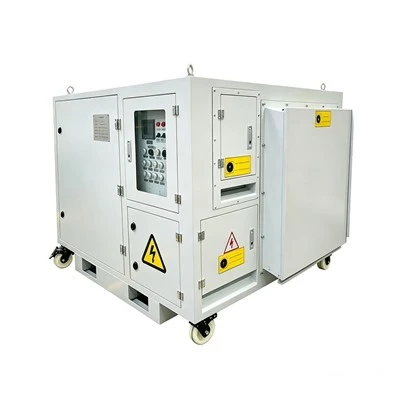
If you’re working on a project that needs a reliable high voltage load bank, whether it’s commissioning a generator, testing a substation, or maintaining a wind farm, reach out to us. We can help you figure out exactly what regulation spec you need, whether you need a permanent unit or a rental for a one-time project, and we’ll make sure you get a load bank that gives you accurate, trustworthy data every time. No jargon, no hidden fine print, just solid equipment backed by 15+ years in the high voltage load bank space.
AC Resistive Load Bank References
- IEEE Std 1100-2019, IEEE Recommended Practice for Powering and Grounding Electronic Equipment
- Electrical Construction Maintenance (ECM) Magazine, “Understanding Voltage Regulation in High Voltage Load Banks”, 2022
- National Electrical Manufacturers Association (NEMA) Standard Load Banks, 2021
- US Department of Energy, “High Voltage Test Equipment for Grid Modernization”, 2023
Hebei Kaixiang Electrical Technology Co., Ltd.
Hebei Kaixiang Electrical Technology Co., Ltd. is one of the most professional high voltage load bank manufacturers and suppliers in China, featured by quality products and good price. Please rest assured to wholesale advanced high voltage load bank for sale here and get quotation from our factory. We also accept customized orders.
Address: No79 Wangshan Road,Luquan District, Shijiazhuang, Hebei, China
E-mail: triumphload@kxload.com
WebSite: https://www.triumphload.com/
