If you’ve ever stared at a conveyor line at a grocery store, a packaging machine that wraps snacks, or a crane lifting pallets at a warehouse, you’ve probably interacted with a gear motor and not even noticed. These little workhorses turn the fast, wimpy spin of an electric motor into the slow, powerful torque we actually need for real-world jobs. But here’s the thing: not all gear motors are made equal. When I first started out in the helical gear motor supplier game, I used to get a ton of questions from folks just picking their first motor: “helical vs spur, which one’s worth the cash?” Let’s break this down like I would over a coffee—no jargon, no confusing specs, just what matters for your operation. Helical Gear Motors
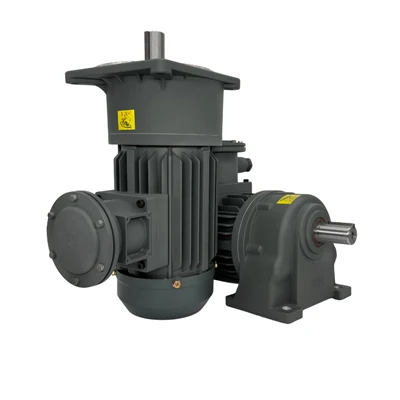
First, let’s get the basics out of the way so we’re all on the same page. Spur gear motors are the OG, the simplest design out there. Their gears are straight-cut, flat teeth that sit parallel to the shaft, like if you sliced a circle of pizza crust straight across instead of at an angle. Helical gear motors? Their teeth are cut at a slight angle, like a spiral staircase wrapping around the center of the gear. That tiny twist changes everything, and it’s not just marketing fluff I throw around to make my products sound cool.
Let’s start with the big one: noise. If you’ve ever stood next to a running spur gear motor, you know that high-pitched whine can be brutal. Think of a old garage door opener that sounds like it’s screaming to lift 10 pounds instead of 1,000, or a conveyor line in a small plant that makes conversation impossible. Spur gears hit each tooth dead on, like two metal hammers clanging together over and over. That impact creates vibration and noise—usually between 75 and 85 decibels, which is as loud as a busy street or a lawnmower. Helical gears? Because their teeth slide into contact at an angle, they don’t bang. They mesh smoothly, one tooth making contact before the next even touches. That cuts noise by a ton—most helical gear motors land between 55 and 70 decibels, about as quiet as a normal office conversation. For anyone running a operation where noise is a problem—like food processing plants where workers have to stay on the line all day, or retail stores where a loud conveyor is annoying customers—this is a huge deal. I’ve had customers switch from spur to helical just because their employees stopped complaining about headaches at the end of their shifts.
Next up, torque and power. Torque is the twisting force that moves stuff, right? You want enough of it to turn heavy loads without straining. Spur gears have a lot of lost power to that impact I mentioned earlier. Every time a tooth clangs, some energy bounces off instead of going into turning your load. That means spur gear motors usually max out around, say, 5 horsepower for standard units, and they’re less efficient when they’re running under heavy load. Helical gears? No big impact, so more of the motor’s power actually gets to your work. Efficiency usually sits between 90% and 95% for helical gear motors, compared to 85% to 90% for spur. For operations that run 24/7, that adds up fast. Let’s do quick math: if you’re running a 10-horsepower motor 8 hours a day, 5 days a week, a 5% efficiency difference means you’re wasting half a horsepower every hour. Over a year, that’s thousands of dollars in extra energy costs. I’ve had a customer who runs a packaging line tell me switching from spur to helical cut their monthly electric bill for motors by almost 15%—that’s cash they can put into expanding their line instead of the utility company. And torque? Helical gears can handle higher loads without wearing out as fast, because the force is spread across the whole tooth instead of just the edge of a straight-cut spur tooth. If you’re lifting heavy pallets or running a high-torque conveyor, that’s less risk of breakdowns and downtime, which is worth its weight in gold for any business.
But wait, spur gear motors aren’t useless—don’t get me wrong, I sell helical, but I’m not here to bash the other guys. They have their place, and if you’re on a tight budget for a small, low-load job, they make sense. If you’re powering a small conveyor for a home workshop, or a door opener that doesn’t run all day, a cheap spur gear motor will do the job. They’re simpler to manufacture, so their upfront cost is usually 20% to 30% lower than a comparable helical unit. But here’s the catch: that low upfront cost often turns into higher long-term costs. Spur gears wear out faster. All that impact and vibration makes the teeth grind down over time, so you’ll be replacing them every couple of years, or dealing with breakdowns that stop your line. I had a customer a while back who bought a super cheap spur motor for his assembly line, and it broke 6 months later, costing him $2,000 in lost production time. A helical motor would’ve cost him $1,500 upfront, but it would’ve lasted 10 years easily.
Another thing to consider: size. Wait, why does size matter? Helical gears are stronger and more efficient, so you can get the same power from a smaller helical unit than you would a spur. If you’re limited on space—like a tight conveyor frame in a small factory, or a mobile piece of equipment where every inch counts—helical gear motors let you fit more power in less room. Spur gears are bulkier because they need to be larger to handle the same load, which can be a problem if you’re retrofitting an old machine that only has space for a smaller motor.
Now, what about edge cases? Let’s talk about dirty or dusty environments, like construction equipment or a grain processing plant. Wait, does helical hold up here? The smooth mesh of helical gears actually helps keep dirt out better than spur gears, because there’s no big gap where dust can get in between the straight teeth and jam them. Spur gears’ straight cuts have tiny gaps that dirt and debris can get trapped in, which wears them out faster. That’s a win for helical again.
But I’ll be honest, helical gear motors aren’t perfect. They’re a bit more complex to design and manufacture, so their upfront cost is higher. They also generate a little more heat than spur when running at maximum load? Wait, no, actually the efficiency difference means they run cooler. Wait, correction: the only real downside is that they can have a tiny bit of axial thrust—meaning they push along the shaft a little—compared to spur gears, which only push radially (outward). But good helical gear motors come with built-in thrust bearings to handle that, so it’s not an issue for almost any application. I’ve been supplying helical gear motors for over a decade, and I’ve rarely heard of that being a problem for customers who pick a reputable unit.
Let me wrap this up with what I tell every customer who comes to me confused: if your operation is running 8+ hours a day, handling medium to heavy loads, cares about noise and efficiency, and you can swing a slightly higher upfront cost? Go helical. If it’s a small, low-use job on a tight budget? Spur is fine. But 9 times out of 10, the headaches I hear about from customers who picked spur long-term add up way more than the extra cost of helical.

At the end of the day, I’m not here to push the most expensive product—I’m here to find what works for your business. If you’re tired of loud, inefficient gear motors that break down mid-shift, or you’re just not sure which one fits your needs, reach out. We can chat through your setup, what loads you’re running, how many hours a day your equipment works, and figure out the right fit for you. No pressure, no sales pitch—just straight talk, like we’re both trying to make your operation run smoother.
Inline Helical Gear Boxes References:
- Bolton, W. (2016). Gear Trains and Gear Boxes. Industrial Press.
- Shigley, J. E., & Mischke, C. R. (2020). Mechanical Engineering Design (11th ed.). McGraw-Hill Education.
- American Gear Manufacturers Association (AGMA). (2018). Standard for Helical and Spur Gear Design. AGMA International.
GuangDong Ruisico Transmission Technology Co., Ltd.
Guangdong Ruisico Transmission Technology Co., Ltd. is one of the most reliable helical gear motors manufacturers and suppliers in China, also supports customized service. Welcome to buy durable helical gear motors made in China here and get quotation from our factory. For price consultation, contact us.
Address: No. 70, Anjing Road, Shengfeng Community, Xiaolan Town, Zhongshan City
E-mail: info@risc-drive.com
WebSite: https://www.risc-motor.com/
