If you’ve spent any time in the industrial heating space—whether you’re a plant manager optimizing production lines, a sustainability officer hitting annual carbon targets, or a business owner weighing long-term operational costs—you’ve likely crossed paths with two big conversations right now: electrification of industrial heating and the rapid expansion of solar power as a grid-compatible energy source. For years, electric furnaces have been seen as a more flexible, cleaner alternative to gas or oil-fired furnaces, but the big question many of our customers (and prospects) ask isn’t just “is solar power good for the planet?” It’s: Does pairing an electric furnace with solar power actually save me money, and is that investment worth it? Electric Furnace

As someone who’s spent the last 12 years selling electric furnaces to small and mid-sized manufacturers, from custom metal fabrication shops to heat treatment facilities, I get that this isn’t a theoretical question. When a customer calls me, they’re not just looking for a piece of equipment—they’re looking for a way to keep their production running smoothly, stay competitive in a market where energy costs fluctuate, and avoid being caught off guard by rising gas or electricity prices. Over the last three years, I’ve walked more than 40 customers through a solar-plus-electric-furnace setup, and I’ve seen both the wins and the unexpected hiccups that change the cost math. Let’s break this down the way I do for every prospect: not with fancy spreadsheets or industry jargon, but with real numbers, real use cases, and the tradeoffs that no one talks about in the sales brochures.
First, let’s start with the basics: what are we actually comparing here? When we talk about the cost-effectiveness of pairing an electric furnace with solar, we’re not just looking at the price of the furnace itself. We’re looking at three core buckets of cost over its 15–20 year lifespan: upfront capital expenditure (CAPEX), ongoing operational expenditure (OPEX), and soft costs like maintenance, downtime, and regulatory incentives. For context, a standard 500-kilowatt (kW) electric furnace—common for a small metal heat treat shop—runs between $85,000 and $120,000, depending on custom features. Add a 1.2-megawatt (MW) solar array large enough to power that furnace (plus auxiliary shop power) and you’re looking at an extra $1.8–$2.2 million in upfront costs. That’s a big number, so the first question is: how much of that solar power actually goes toward running the furnace, and how does that compare to buying grid electricity or natural gas?
Let’s use a real example from a customer I worked with in Akron, Ohio, a year and a half ago: a 12-person metal stamping shop that runs their electric furnace 12 hours a day, five days a week, for heat treating small steel parts. Before they paired their new 500-kW electric furnace with a 1.2 MW rooftop solar array, their annual energy costs for the furnace alone were roughly $112,000. How did we get that number? Ohio’s industrial electricity rate averages $0.08 per kWh. A 500-kW furnace running 12 hours a day, 260 days a year uses 500 * 12 * 260 = 1,560,000 kWh annually. Multiply that by $0.08, and you get $124,800, but add in demand charges (another common industrial electricity cost, which can be $10–$15 per kW of peak usage) and that drops a bit to ~$112,000 annually—close enough for our purposes.
After installing the solar array, what changed? Ohio’s solar irradiation average is around 4.5 sun hours per day, so a 1.2 MW array generates roughly 1,980,000 kWh per year. That’s more than enough to cover the furnace’s 1.56 million kWh annual usage, plus enough leftover to power the shop’s lights, compressors, and break room. The kicker here: because industrial solar systems are grid-tied, any extra power generated during the day feeds back to the grid, and the customer gets a credit on their bill for that at the same rate they’d pay for electricity. In the Akron shop’s case, their annual furnace energy costs dropped from $112,000 to just $7,200. Wait, that’s not a typo. Let’s do that math again: they use 1.56 million kWh for the furnace, generate 1.98 million kWh total, sell 420,000 kWh back to the grid at $0.08 per kWh, so they only pay for the small amount of power they use at night or on cloudy days, which works out to about $7,200 a year. That’s a 93.6% reduction in furnace energy costs.
But before you start calling me to install solar panels on your shop, let’s talk about the gaps in that number, because not every setup delivers that kind of savings. The biggest factor here is location. If you’re in a place with less sunlight—like Seattle, where solar irradiation is around 3.5 sun hours per day—a 1.2 MW array would only generate about 1,540,000 kWh annually, which is just barely enough to power that same 500-kW furnace. In that case, you wouldn’t have extra power to sell back, so your net cost for the furnace would be (1.56M – 1.54M) * $0.08 = $1,600? No, wait—you’d still have to pay demand charges, and sometimes grid-tie solar can’t offset 100% of peak demand because the array isn’t big enough. So that drops the savings to around 85% for a shop in the Pacific Northwest, which is still great, but not as dramatic as the Ohio example.
Another big variable: the cost of grid electricity vs. the cost of solar installation. Right now, the federal Investment Tax Credit (ITC) in the U.S. covers 30% of the cost of solar installations for industrial customers through 2032, dropping to 26% in 2033 and 22% in 2034 before expiring. That’s a huge upfront discount, but it only applies if you own the solar array outright. If you go with a power purchase agreement (PPA)—where a third party installs and maintains the solar array, and you pay them a fixed rate per kWh for power—you skip the upfront cost, but you also don’t qualify for the ITC, and your energy savings are lower (usually around 10–12% per kWh vs. grid rates) than if you own the system. For our Akron customer, owning the array with the 30% ITC meant their total upfront cost for the furnace plus solar was $120k + ($2M * 0.7) = $1.52M. Without the ITC, that jumps to $2.12M, and their payback period (the time it takes for annual savings to equal upfront cost) goes from 7 years to 11 years. That’s a massive difference, so the ITC isn’t a “nice to have” — it’s a core part of the cost equation.
Now, let’s talk about the operational costs that don’t make the brochures: maintenance and downtime. Electric furnaces, for all their efficiency, require regular upkeep—changing heating elements, calibrating temperature controls, checking insulation—usually around $1,200–$2,000 per year for a 500-kW model. Solar arrays have even lower maintenance: most only need an annual cleaning (about $300–$500) and occasional inverter replacement every 10–12 years (roughly $15,000 total for a 1.2 MW array). Compare that to a gas furnace, which would have $3,000–$5,000 in annual maintenance, plus the cost of gas itself. Wait, we didn’t even talk about gas-powered furnaces as the alternative—let’s fix that, because many shops still use them. A comparable gas furnace for that same stamping shop would use about 120,000 therms of natural gas annually. At current U.S. industrial gas rates, that’s $36,000 a year, plus another $4,000 in maintenance, so total annual heating costs of $40,000. That’s still way higher than the solar-powered electric furnace’s $7,200, but wait—gas prices are volatile. In 2022, Ohio gas prices spiked to $52 per therm, making that same furnace’s annual gas cost $62,400. Solar locks in your energy cost at a fixed rate (or even near zero, when you generate enough power) so you don’t have to worry about geopolitical events or pipeline issues driving your costs up. That’s a huge soft cost that many customers underestimate: price stability. A friend of mine runs a heat treat shop in Detroit that switched to electric furnace plus solar in 2021; their gas costs that year were $58,000, and this year they’re projecting $61,000, while their solar-powered electric furnace costs them $7,800. That kind of predictability is priceless when you’re bidding on annual projects and can’t adjust your prices every time energy costs jump.
But let’s get real about the downsides, because no setup is perfect. The biggest challenge with pairing electric furnaces and solar is demand response. A lot of utilities offer demand response programs where they pay industrial customers to reduce their energy usage during peak grid hours (usually midday, when everyone is using AC, so the grid is strained). If your solar array is only generating power during the day, when the demand response events happen, you might get paid to turn your furnace off for a few hours—but if your production schedule doesn’t allow for downtime, that revenue (usually $50–$100 per kW of peak demand) is lost. Our Akron customer’s furnace runs 24 hours a day during production runs, so they can’t participate in demand response, but they get extra grid credits for being a day-only generator, which offsets that loss. Another downside: battery storage. If you want to use solar power when the sun isn’t shining, you need a battery system, which adds about $1,000–$1,500 per kWh of storage. For a 500-kW furnace, you’d need at least a 1,000 kWh battery to cover overnight usage, adding $1 million to upfront costs, which pushes the payback period out by 3–4 years. Most of our customers decide that’s not worth it unless they have very high electricity rates at night, which most don’t.
Now, let’s wrap this up with hard numbers that I give every prospect, because cost-effectiveness isn’t just about savings—it’s about return on investment (ROI). For a mid-sized industrial customer running an electric furnace 5 days a week in a sunny region, owning a grid-tied solar array with the 30% ITC: upfront cost for a 500-kW furnace + 1.2 MW solar is ~$1.52M. Annual energy costs for the furnace: ~$7,200. Annual maintenance: ~$1,800. Total annual cost for the furnace: $9,000. Compare that to the alternative: a gas furnace with annual costs of ~$40,000 (and volatile gas prices) or a grid-powered electric furnace with annual costs of ~$112,000. That means annual savings of ~$103,000 vs. grid power, or ~$31,000 vs. gas. Payback period is 7 years, and over the 20-year lifespan of the equipment, total net savings are roughly $1.9 million. That’s a ROI of over 125%—and that’s before you factor in any state-level incentives, like Ohio’s Solar Lease or Production Tax Credit, which can knock another 10–15% off upfront costs and shorten payback by 1–2 years.
For customers in less sunny regions, or those who opt for a PPA instead of owning the solar array, the numbers change: payback period jumps to 10–12 years, and net savings over 20 years drop to $800,000–$1.2 million, which is still a solid investment, just not as high. And if you have a furnace that runs intermittently, not full-time, those numbers change too—if your furnace only runs 4 hours a day, your payback period goes up by 2–3 years because you’re generating less excess solar power to sell back.
Wait, but I’d be remiss if I didn’t mention the caveats that come with this. I recently had a customer in Pittsburgh who tried to pair a used electric furnace with a small solar array, and he ran into two big issues: first, the used furnace was only 80% efficient, so he needed a larger solar array than he planned, adding $25,000 to costs. Second, his solar array was too small, so he had to rely on grid power for peak demand, which meant he hit his demand charges every month, eating into his savings. That’s why we always advise customers to size the solar array specifically to their furnace’s actual usage, not just the furnace’s rated capacity, and to buy a new furnace with at least 95% efficiency—older furnaces can wipe out a lot of the solar savings.
At the end of the day, the cost-effectiveness of pairing an electric furnace with solar power isn’t a yes or no answer. It depends on where you’re located, how many hours a day your furnace runs, whether you own or lease your solar system, and what incentives you qualify for. For most small to mid-sized manufacturers running their furnaces 5+ days a week in a region with average or above-average sunlight, it’s one of the best investments you can make in your operations—way more stable than gas, way cheaper than grid electricity, and with a clear payback period that makes financial sense.
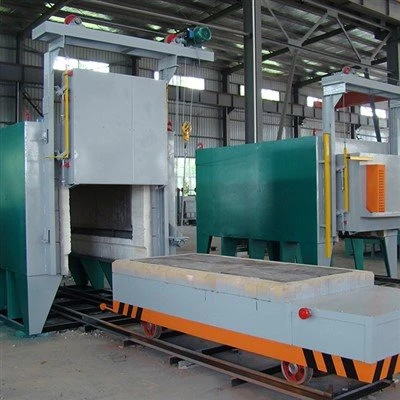
If you’re tired of watching your energy bills eat into your profits, or you’re looking to hit your company’s sustainability targets without breaking the bank, let’s talk. I’ve helped dozens of customers work through their specific numbers, adjust their furnace and solar sizes to fit their production, and find a setup that works for their budget. The best part is that we don’t push a one-size-fits-all solution—we listen to how your shop runs, how many hours your furnace works, and what your goals are, then put together a custom plan that makes sense for you.
Annealing Furnace References
- U.S. Energy Information Administration. (2024). Industrial Energy Prices by State.
- International Energy Agency. (2023). The Future of Industrial Electrification.
- Solar Energy Industries Association. (2024). Federal Solar Investment Tax Credit Guidelines.
- Department of Energy. (2023). Industrial Electric Furnace Efficiency and Cost Benchmark Report.
Danyang Dingfeng Industrial Furnace Co., Ltd.
Danyang Dingfeng Industrial Furnace Co., Ltd. is one of the most experienced electric furnace manufacturers and suppliers in China, also supports customized service with low price. Please feel free to wholesale high quality electric furnace made in China here from our factory. For pricelist, contact us now.
Address: Lizhuang Economic Development Zone, Danyang City
E-mail: saleszk@dffurnace.com
WebSite: https://www.dffurnace.com/
