When I first started in the power cable industry 12 years ago, I thought “a cable is a cable” — just some copper wrapped in plastic that gets electricity from Point A to Point B. That was before I sat across from a maintenance manager at a local manufacturing plant who told me their low-voltage cables had failed so many times that they were paying 30% of their annual electrical budget on replacements. It turned out they’d been using high-voltage cables for their 480V equipment, thinking more insulation meant more protection. That conversation made me realize how many people don’t understand the real differences between low-voltage and high-voltage power cables — and how choosing the wrong one isn’t just a small mistake. It can shut down entire operations, waste money, and even pose safety risks. As a low-voltage power cable supplier, I work with customers every day to get this right, and today I want to break down what makes these two cable types different, why it matters, and how choosing the right low-voltage cable can save you a lot of headache. Power Cable Low Voltage
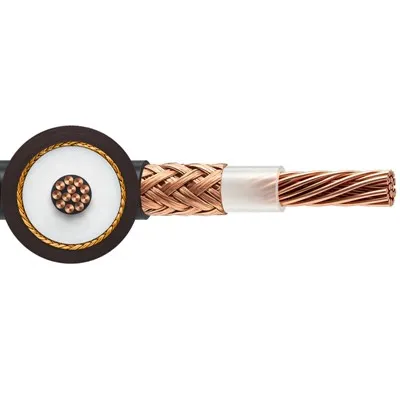
Let’s start with the basic definition, because that’s where all the confusion often starts. The simplest way to tell them apart is by their voltage rating, but that’s not just a random number printed on the jacket. Industry standards set clear thresholds: low-voltage cables are rated for 1,000 volts (V) or less, usually used for everything from residential outlets and commercial office lighting to industrial machinery and commercial building power distribution. High-voltage cables, on the other hand, are rated above 1,000V, often ranging from 1kV up to hundreds of kV, and used for long-distance power transmission between substations or large industrial plants that need massive amounts of power. But that number only scratches the surface — the design, materials, and purpose of the cables are night and day.
The most obvious structural difference is insulation thickness. I see this every time I pull a cable off the shelf: a low-voltage cable’s insulation is thin, just enough to protect the copper conductor from physical damage, moisture, and minor environmental exposure. A typical low-voltage cable for industrial use might have insulation that’s 1 to 3 millimeters thick, depending on the voltage (for example, 480V cables have thinner insulation than 600V cables). High-voltage cables? Their insulation is a whole different beast. A 10kV high-voltage cable can have insulation that’s 10 times thicker — sometimes 20 to 50 millimeters — because it has to insulate against electrical stress. When voltage is high, it can “leak” through even tiny gaps, so high-voltage insulation is designed to prevent that, often with multiple layers of specialized material like cross-linked polyethylene (XLPE) or ethylene propylene rubber (EPR) that can handle high electrical stress without breaking down.
Another big structural difference is conductor size and type. Low-voltage cables carry lower voltage but higher current for most applications — think of a 100-horsepower motor that needs to pull hundreds of amps to run. That means low-voltage conductors are often thicker, made of solid or stranded copper (or sometimes aluminum, though copper is more common for reliability in industrial settings) to handle high current without overheating. High-voltage cables, by contrast, carry high voltage but lower current, so their conductors are often smaller, even if they’re transmitting more total power. For example, a high-voltage transmission line carrying 100kV might only need a conductor that’s a fraction of the size of a low-voltage feeder cable carrying 480V for the same total power. I always tell my customers: if you’re running power to equipment that’s within a building or a small industrial site, the conductor size is about carrying enough current. If you’re running power down a highway to a substation, it’s about managing voltage drop over long distances.
Then there’s the way they’re installed and used, which is where a lot of mistakes happen. Low-voltage cables are designed for indoor or short-distance outdoor use, often run through walls, conduits, or underground in residential backyards or industrial parking lots. They’re flexible enough to pull through tight spaces, and they’re often color-coded to make installation easier — black for neutral, red for hot, green for ground, that sort of thing. They’re also designed for frequent handling, since electricians move them around job sites all the time. High-voltage cables, though, are big, bulky, and almost never installed in tight indoor spaces. They’re strung between utility poles or buried deep underground in trenches, often with special protective layers (like steel armor) to withstand being run over by heavy construction equipment or buried under yards of soil. They’re not meant to be moved around regularly — once they’re installed, they stay for decades.
Safety is another area where the differences are critical, and this is where using the wrong cable can have serious consequences. Low-voltage cables are dangerous if mishandled — 480V can give you a painful shock, even kill someone if you’re not trained to work with it — but the safety risks of high-voltage cables are on a whole other level. High voltage can jump through air, meaning you don’t even have to touch the conductor to get shocked; a 10kV line can arc over from a distance of several inches. That’s why high-voltage cables are designed with more insulation and marked with bright warning signs to keep people away. Low-voltage cables, by contrast, are much safer to work with when installed correctly, which is why they’re the standard for outlets, lighting, and machinery in most commercial and industrial settings.
What I see most as a low-voltage supplier is that many customers underestimate how important the small details of low-voltage cables are. For example, a lot of people think all low-voltage cables are the same — but there are different types for different environments. If you’re running a cable in a wet manufacturing plant, you need a low-voltage cable with water-resistant insulation, not a standard indoor cable. If you’re running it outside in direct sunlight, you need UV-resistant jacket material, otherwise the insulation will crack and fail in a couple of years. High-voltage cables do have specialized variants too, but their specializations are for things like underground burial, underwater installation, or long-distance transmission, not for small, demanding indoor spaces.
Let me give you a real example that I’ve seen three times in the last year alone. A small food processing plant I work with decided to upgrade their conveyor system. They ordered generic cables from a big-box distributor, thinking “low-voltage is low-voltage.” The problem? They got general-purpose low-voltage cables designed for dry indoor use, not for a wet, high-temperature plant environment. Within six months, the insulation on the cables running near the washing station had degraded, causing short circuits and shutting down the entire conveyor line. The plant lost two days of production, cost them $12,000 in repairs, and they had to replace all 150 feet of cable with the correct water-resistant low-voltage cable I supply. That’s a avoidable mistake that could have been prevented if they’d understood that low-voltage cables aren’t one-size-fits-all — and that using a high-voltage cable would have been even worse. High-voltage cables are much more expensive, bulkier, and overkill for 480V equipment; they also wouldn’t have the right flexibility or resistance for that wet environment, so they’d have failed too, just at a higher upfront cost.
Another example is a small office building I worked on last quarter. The building’s electrician tried to save money by using 10kV cable for the building’s lighting circuit, thinking it was more durable. First, he couldn’t even pull the cable through the wall conduits — it was too stiff and thick, and would have required cutting into drywall, which would have added $5,000 to the job. Second, the insulation on the high-voltage cable was thicker than needed, so the conductors were smaller, and the building’s electrical system couldn’t handle the current draw for all the lights and outlets. He had to rip it all out and use standard low-voltage cables, which are thin enough to fit through the conduits and have the right conductor size for the load. That mistake cost him three extra days of labor and $2,000 in wasted cable — all because he didn’t know the basic structural differences between the two.
So, why does this matter for you? Whether you’re a facility manager, an electrician, or a business owner planning an upgrade, choosing the right cable isn’t just a technical detail — it’s about reliability, safety, and your bottom line. Using a high-voltage cable when you need low-voltage is a waste of money, because high-voltage cables cost 2 to 5 times more than equivalent low-voltage cables. They’re also harder to work with, leading to higher installation costs. Using a low-voltage cable in a high-voltage application is even riskier: it can overheat, break down, cause electrical fires, or lead to fatal shocks. And even within low-voltage cables, picking the wrong type for your environment leads to premature failure, downtime, and more replacements.
As a low-voltage power cable supplier, that’s what I focus on every day: giving customers the right low-voltage cable for their specific job, not just the cheapest cable on the shelf. I work closely with electricians and facility managers to understand their space, their load requirements, their environment, and their budget, and I help them choose the cable that will perform well for years, not just for the first six months. I stock a full range of low-voltage cables: 600V cables for residential and commercial use, 1kV cables for industrial machinery, water-resistant cables for wet environments, UV-resistant cables for outdoor use, flexible cables for tight spaces, and rigid cables for heavy loads. Every one is tested to meet industry standards, so my customers don’t have to worry about failure when they’re in the middle of a job.
If you’re planning an electrical upgrade, replacing old cables, or just looking to make sure you’re using the right cable for your equipment, don’t guess. The difference between a working cable and a cable that causes downtime or safety issues isn’t as complicated as it sounds, but it’s worth talking to someone who knows low-voltage cables inside and out. You don’t have to deal with generic products or distributors that don’t understand the specific needs of your project. Whether you need a small run of low-voltage cable for an office space or a full bulk order for an industrial facility, I can help you get the right product at a fair price, with the support you need to get the job done safely and on time. Reach out to discuss your project today, and let’s make sure you’re choosing the right low-voltage cable for your needs.
Power Cable Low Voltage References
- Underwriters Laboratories. (2022). Standard for Power Cords and Equipment Wiring.
- International Electrotechnical Commission. (2021). IEC 60227: Polyvinyl chloride insulated cables of rated voltages up to and including 450/750 V.
- Energy Information Administration. (2023). Electrical Transmission and Distribution.
- National Electrical Manufacturers Association. (2022). Low-Voltage Power Cable Performance Standards.
Yangzhou Huayu Cable Co., Ltd.
Yangzhou Huayu Cable Co., Ltd. is one of the most professional power cable low voltage manufacturers and suppliers in China, also supports customized service with low price. Please feel free to wholesale advanced power cable low voltage made in China here from our factory. Contact us for pricelist.
Address: No. 9 Jingang Road, Yangzhou City, Jiangsu Province, China
E-mail: huayucableco@126.com
WebSite: https://www.huayucabletech.com/
