Let me cut to the chase—if you’re a duplex homeowner sick of hauling groceries, luggage, or your grumpy elderly parent up two flights of stairs, you’ve probably daydreamed about a home elevator. But here’s the thing I hear every single day as a duplex home elevator supplier: “Wait, can I even put an elevator in my second-story unit without turning my garage or attic into a clunky machinery room?” The short answer is YES— and that’s exactly what I’m gonna break down for you today. No confusing jargon, no sales fluff, just real talk about how it works, why it matters for duplexes, and what you need to know before pulling the trigger. Duplex Home Elevator
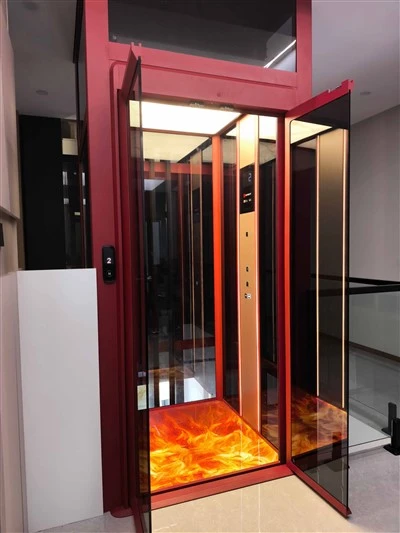
First off, let’s get one common myth outta the way old-school residential elevators relied on a big, loud machinery room stuffed with gears, a hydraulic pump, or that clunky electric motor setup that needed its own 5×5 space tucked somewhere. But those were built for single-family homes, not duplexes—where you’ve got two separate living spaces, limited square footage, and zero desire to let loud machinery ruin your vibe or take up space you could use for a home office or guest nook. That’s why we and most modern home elevator makers shifted away from machinery room (MR) designs a few years back. Now, we have what’s called “machine room-less” (MRL) duplex home elevators, and they’re game-changers for split-level living.
Wait, let’s make that specific to duplexes, not just any home. Duplexes are unique, right? You’ve got two units stacked on top of each other—Unit 1 on the ground floor, Unit 2 above—so the elevator’s main job is connecting those two without intruding on either’s layout. A lot of duplex owners I work with hate the idea of sacrificing a whole closet or a chunk of their patio for a separate machinery room. With MRL designs, the tiny, compact motor and control panel fit right into the elevator shaft itself—like, it’s tucked above the cab (or sometimes below, depending on shaft size) so it doesn’t take up extra space elsewhere. For duplexes, that’s huge because you don’t have to carve out a whole new room in either unit to make it work.
Now, let’s get into the nitty-gritty of how this actually works—no engineering degree required, promise. Traditional elevators use either hydraulic systems (they push a piston up from the ground, which needs a big pump) or gear-driven traction systems that rely on a separate machine room to hold the motor and cables. MRL traction systems, the ones we use for all our duplex home elevators, use smaller, permanent magnet motors that are way more efficient and way less bulky. Those motors don’t need the same amount of space or heavy-duty support as old gear motors, so they can fit right inside the top of the elevator shaft, alongside the guide rails that keep the cab moving straight. The control panel is even smaller now—most are the size of a toaster, so we can mount it on a wall inside the shaft or even in a nearby closet that’s already unused.
Wait, but hold on—does that mean it’s less safe? Nope. In fact, MRL duplex elevators have to meet the exact same safety codes as traditional ones, like ASME A17.1 (that’s the US standard for elevators, if you care) and whatever local building codes apply. We test every single model we sell for load capacity (most can hold 1,000 lbs, which is enough for 2-3 adults or a wheelchair), speed (usually 20 feet per minute, which is slow enough to feel safe but fast enough that you’re not waiting around), and emergency features—like backup batteries so the cab doesn’t get stuck if the power goes out, and door sensors that stop the doors if they detect something in the way. I’ve had a customer tell me their neighbor got a traditional elevator with a machinery room and complained that it rumbled every time it ran—our MRL ones are silent, too, because the motor is enclosed in the shaft, so you barely hear a thing from either duplex unit.
Now, let’s talk about why this is specifically perfect for duplexes, not just single-family homes. A lot of duplex owners have weird layouts—maybe the two units are on different sides of a shared wall, or there’s a small attic crawl space that’s all you have to work with between floors. A machinery room would take up that entire crawl space, making it unusable for storage or even as extra living space. With MRL, we can sometimes even fit the elevator shaft into a small existing gap between the two units, like a 3-foot wide space that was previously just for pipes. I had a customer last year who had a duplex where the only vertical space between floors was a narrow 3.5ft gap next to their shared bathroom. They thought they had to scrap the idea of an elevator until we showed them our compact MRL model that fits in shafts as small as 3ft x 4ft. No machinery room, no changing their entire bathroom layout—just a tight, perfect fit.
Another big point: cost. Let’s be real, price matters. Traditional elevators with a machinery room cost anywhere from $20,000 to $40,000 for a duplex, right? Because you’re paying for the extra space to build the machinery room, plus the materials for that room itself. MRL duplex home elevators cut that cost down by 20-30% because you don’t have to construct a separate room. Also, installation is faster—we don’t have to frame out a whole new space for machinery, so we can usually install the elevator in 3-5 days, versus 1-2 weeks for a traditional one that needs a machinery room. That means less disruption to your duplex life, too—no construction crew hanging around for weeks, no dust in both units, just quick, clean installation.
Wait, but is there any catch? I’m not gonna lie—every product has limits. The biggest one is shaft size. If your duplex has a really tight shaft (like, less than 3ft wide) or a really small header (the space above the top floor where the motor goes), some MRL models might not fit. But most duplexes have at least a 3ft x 5ft shaft, which is totally enough for our standard MRL duplex elevators. Another thing: weight capacity. If you need something big enough for a wheelchair, a hospital bed, or a large piece of furniture, you might need a slightly bigger MRL model, but even then, we make compact heavy-duty options that don’t need a machinery room. Also, if you’re adding an elevator to an existing duplex (not building new), you have to check if your floors can support the load—our team will do a free assessment for you, so you don’t have to guess.
Now, let’s talk about common misconceptions I hear from duplex owners. A lot of people think MRL elevators are less durable, but that’s not true at all. The permanent magnet motors we use have way fewer moving parts than old gear motors, so they break down less often. We service all our elevators every 6 months, same as traditional ones, and most customers go 10+ years without any major repairs. Another myth: they use more electricity. Nope—MRL motors are super energy-efficient, using about the same amount of electricity as a standard fridge. So your utility bill won’t jump at all, which is a huge plus for both duplex units.
Let me give you a real example of a duplex customer I worked with last month. They had a two-story duplex in Chicago, with an elderly parent living in Unit 2 (the second floor) and two young kids running around in Unit 1. They had a tiny attic space between the two floors, about 4ft wide, and thought they’d have to turn half the attic into a machinery room, which would mean losing all their holiday decor storage. They reached out to me, and we installed our compact MRL duplex elevator that fits right into that 4ft wide shaft. The motor is tucked in the very top of the shaft, so the attic is still full usable—they even kept their storage bins up there. Now, their parent can go up and down without help, and the kids use it to carry their soccer gear and backpacks. No noise, no construction mess, no extra machinery room. Perfect for their duplex.
So, to circle back to the original question: Is it possible to install a duplex home elevator without a machinery room? 100% yes. It’s not just possible—it’s the best option for duplexes, because it saves space, cuts costs, installs fast, and works with the unique layout of two stacked living units. Old-school machinery room elevators are outdated, bulky, and not suited for duplex life anymore. Modern MRL duplex home elevators are made exactly for this kind of split-level living.
If you’re a duplex owner who’s been toying with the idea of an elevator but worried about space, cost, or construction hassle, don’t sleep on MRL models. The first step is a free, no-obligation assessment to check your shaft size, load capacity, and layout—our team will come out, take measurements, answer all your questions, and give you a clear, upfront quote. No sales pressure, no hidden fees, just honest info about what works for your specific duplex.

If you’re ready to stop hauling groceries up stairs, make your duplex more accessible, or just add a little convenience to your life, reach out to our team today. We’ve installed dozens of MRL duplex elevators across the country, and we know exactly how to fit one into even the trickiest duplex layouts. Don’t let the myth of machinery rooms hold you back—your duplex deserves an elevator that works for you, not the other way around.
Small Shaft Gantry Frame Panoramic Elevator References
- ASME A17.1 Safety Standard for Elevators and Escalators. American Society of Mechanical Engineers, 2022.
- Residential Machine Room-Less Elevator Technology Report. National Association of Home Builders, 2021.
- Duplex Accessibility Guidelines for Home Modifications. International Code Council, 2020.
- Home Elevator Cost and Efficiency Study. Consumer Reports, 2022.
- Permanent Magnet Motor Applications for Residential Traction Elevators. Elevator World Magazine, 2021.
Zhejiang Homeway Elevator Co., Ltd.
Zhejiang Homeway Elevator Co., Ltd. is one of the most professional duplex home elevator manufacturers and suppliers in China. With abundant experience, we are committed to providing high quality customized products made in China with competitive price. If you’re going to buy CE approved duplex home elevator, welcome to get quotation from our factory.
Address: No.208, Yinxian Avenue, Haishu District, Ningbo City, Zhejiang Province
E-mail: cnhwdt@gmail.com
WebSite: https://www.homewayelevator.com/
