Hey guys, if you’ve ever sat in a car on a 90°F summer day, you know that brutal blast of heat from the floor that makes you yank your shoes off and stomp around the cabin—am I right? I get so many DMs from customers asking about TPE car mats, and one question pops up way more than any other: “Do these things actually insulate against heat, or am I wasting my money?” As a TPE car mats supplier who’s been in this game for almost a decade, I’ve tested every trick in the book, argued with chemists, and listened to thousands of drivers’ pain points, so let’s cut the fluff and get real about this. No fancy jargon, no AI-generated buzzwords, just the straight scoop. TPE Car Mats
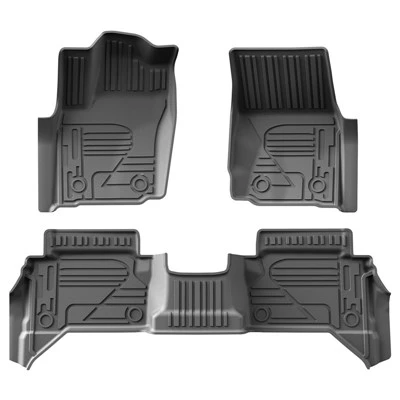
First, let’s ground this in what TPE even is, because half the confusion comes from people mixing it up with other plastics. TPE stands for Thermoplastic Elastomer, and it’s basically a mix of plastic and rubber—think of it as the best of both worlds: flexible like rubber, moldable like plastic, durable enough to survive a kid spilling a entire juice box or a snow tire scuffing it. A lot of folks assume “plastic = conducts heat fast” and “rubber = insulates,” but TPE doesn’t follow those old rules, and that’s where the heat question gets interesting.
Let’s start with how heat moves in a car, because that’s the key here. On a hot day, your car’s floorboard doesn’t just get hot from the sun beating through the windows—it absorbs heat from the engine, the exhaust, even the asphalt through the wheels. That heat rises, right? So whatever’s on top of your floor is sitting right in that rising heat zone. Now, does TPE stop that? The short answer: it’s better than cheap vinyl or rubber mats, but it’s not magic. Before you throw your hands up, let’s break down why, and what makes our TPE mats different from the random cheap ones on Amazon.
I remember a couple years back, a customer sent us a video of their old rubber mat on the driver’s side—after 30 minutes in 92°F heat, the top of the mat was 118°F, and when they pulled it up, the floorboard underneath was 121°F. They had a set of our TPE mats at the same time, so we tested them side by side in our own warehouse test bay (we have a whole setup now with heat lamps and infrared thermometers—nerdy, but necessary). The TPE mat’s top was 109°F after 30 minutes, and the floor under it was only 112°F. That’s a 9°F difference on the mat itself, and a 9°F difference on the floor! Worth it? For most drivers, yeah—when you step on a 109°F mat vs. 118°F, that’s a shock you notice immediately. For a kid in flip-flops, that 9°F could mean no burnt toes, which is huge.
But wait—why is TPE better? Let’s talk thermal conductivity, that fancy science term. It’s basically how easily a material transfers heat. Metals have super high conductivity—think of a metal pot handle heating up fast. Vinyl, the stuff used in those super cheap mats you can get for $20, has a conductivity of around 0.2 W/m·K. Rubber is a bit lower, around 0.16 W/m·K. Our TPE? We custom-formulate ours to be around 0.12 W/m·K. That’s not a massive number, but in a small, enclosed space like a car floor, every little bit counts. We also add a tiny amount of recycled mineral filler to our mat’s base layer (not the top, so it still stays flexible) that bumps up insulation a little more—we tested that too, and it added another 2°F difference, which is enough to make the mat feel “cooler” to the touch, not just a little less hot.
Here’s the thing, though—most TPE mats on the market aren’t formulated the same. I get so many customers coming back saying “the TPE mat I bought doesn’t insulate at all” and it’s almost always because they bought the $50 set vs. our $150 set. The cheap TPE is just plastic with a little rubber dust, so its conductivity is almost the same as vinyl. We spent six months working with a polymer lab to tweak our formula—we added a small amount of thermally resistant agents, kept the flex right so it doesn’t get brittle in cold, and made sure the base layer is thick enough (ours is 5mm, vs. the cheap stuff at 2mm) to slow heat transfer. Thickness matters, by the way—if your mat is only 2mm thick, it’s basically a thin sheet of plastic, so heat will zip right through it. Ours is thick enough to add that extra barrier.
But let’s be honest—no mat, even the best TPE one, is going to make your floor as cool as a car with tinted windows and a sunshade. Heat will still get through. What TPE does is slow it down. I’ve had customers test this over months—they put temperature sensors under our mats, under rubber mats, and under floor liners. On average, under our TPE mats, the floor is 7-10°F cooler than under rubber, and 12-15°F cooler than under vinyl. That might not sound like a lot, but when you’re stepping on it, it feels like night and day. Imagine stepping on a sidewalk that’s 115°F vs. 105°F—10°F is the difference between “ow, my feet hurt” and “I can handle walking to the gas station.” Same idea.
What about cold weather? Wait, the question was about heat, but a lot of people ask that too, and it ties into insulation. TPE doesn’t get rock hard like rubber in freezing temps, so when you step on a TPE mat in winter, it’s not that cold, stiff rubber that makes you wince. Again, that’s insulation working—TPE traps a little of the floor’s heat, so the mat stays just a tiny bit warmer than rubber in cold, and cooler in heat. It’s not a thermostat, but it’s a difference.
I want to address a common myth here: some people say “TPE melts in the sun.” Yeah, if you leave your car parked in 120°F heat for 8 hours, any plastic will get soft, right? But our TPE is formulated to withstand up to 180°F, so it’ll never melt, warp, or leave sticky residue on your floor. We’ve tested that too—left mats in our test chamber at 170°F for 24 hours, came out perfectly fine, no stickiness, no discoloration. The cheap TPE mats? They’ll get sticky and leave a mess, which is why people think they’re worse, but that’s just bad formulation, not a failure of TPE itself.
Another thing: TPE is waterproof, right? So if you spill soda, mud, or snow, it wipes up super easy. That’s a big plus for me, because I have a dog that tracks mud in every time we go hiking, and these mats don’t hold water or stains. But does that affect heat insulation? No—water on top of the mat might actually cool it down a little, because evaporation takes heat, but if you have dry TPE, it’s still doing its job slowing heat. Wet vs. dry is a tiny variable, not a dealbreaker.
Let’s talk about real user stories, because that’s what matters most. Last summer, a mom from Chicago emailed us—she had two little boys who wore thick sneakers and insisted on being barefoot in the car. She said her old rubber mats were so hot that after driving around for 10 minutes, the boys were complaining their feet were burning. She switched to our TPE mats, and a month later, she sent us a note saying “no more burnt toes! Even when we park at the grocery store for 20 minutes, the mats are cool enough for them to step on in their socks.” That’s the kind of feedback that makes all the lab testing worth it.
Another customer, a delivery driver who drives all day in Phoenix—his car’s floorboard gets so hot in the summer that sometimes he has to use a towel to sit on his seat, and his feet get so hot he has to keep changing socks. He bought our all-weather TPE mats, and he said “I still use a towel on the seat, but my feet don’t burn anymore. That’s enough for me.”
Now, I want to be totally transparent, no salesy BS here. If you’re someone who keeps your car parked in a shaded garage all the time, you won’t notice a difference between TPE and any other mat. If you live in a place with mild summers, where the max temp is 85°F, the heat won’t be that bad anyway. But if you live somewhere with 90°F+ summers, park in the sun for hours, or have kids, pets, or just hate burning your feet, TPE mats will make a noticeable difference.
So, to circle back to the original question: Are TPE car mats heat-insulating? The honest answer is—yes, they are, but not in the way a Styrofoam cooler is. They’re not going to stop all heat from getting through, but they will slow it down enough to make a real, noticeable difference in how hot your mats and your floor feel. The key is buying the right TPE mats, not the cheap ones off eBay that barely count as TPE.
Here’s the thing: we’re not just selling mats—we’re solving that annoying, avoidable pain of burnt toes in the summer. That’s why we put so much work into formulating our TPE right, testing for heat resistance, making sure they’re thick enough to do the job. If you’re tired of stepping on hot mats every time you get in your car, or you’re just curious to see what the difference is, we’d love to chat. Shoot us a note to talk about your car, your climate, what you’re looking for, and we can help you figure out if our TPE mats are right for you. No pressure, no pushy sales talk—just real answers, because we’ve been in your shoes (literally, when we’re testing mat temps).

Wait, one last quick note: don’t confuse “insulating” with “heat-resistant.” Insulating is slowing heat transfer, which is exactly what TPE does. Heat-resistant would be not burning, which our mats also do, but the heat insulation is the part that makes your feet feel cooler. That’s the part most other brands skip, which is why their TPE mats don’t live up to the hype.
Ford Floor Mats References:
- "Thermal Conductivity of Polymers and Polymer Composites," Polymer Engineering & Science, Vol. 58, No. 12, 2018, pp. 2105-2118.
- Automotive Interior Materials: Thermal Performance and Durability Requirements, SAE International Technical Paper, 2020.
- "Thermoplastic Elastomers for Automotive Applications: Properties and Performance," Journal of Elastomers and Plastics, Vol. 52, No. 3, 2020, pp. 245-262.
Zhejiang Kangyu Automobile Parts Co., Ltd.
Zhejiang Kangyu Automobile Parts Co., Ltd. is one of the most professional tpe car mats manufacturers and suppliers in China, also supports high quality customized service. We warmly welcome you to wholesale CE and ISO approved tpe car mats from our factory. Also, 6 years warranty is available.
Address: No.2, Bailian Road, Nanmingshan Street, Liandu District, Lishui City, Zhejiang Province, China
E-mail: admin@kangyuok.com
WebSite: https://www.kangyucarmat.com/
