Hey everyone, let’s talk about something that’s been a total game-changer for the EPS (Expanded Polystyrene) parts you see every day—think packaging for your new TV, disposable coffee cups, those cool-shaped foam inserts for appliances, even construction insulation. If you’ve ever wondered how those tiny polystyrene beads turn from hard, crumbly little pellets into soft, buoyant foam before being molded, it’s all because of one machine: the EPS pre-expander. And since I’m the head of product supply for a company that builds these bad boys, I get way too many questions about how they actually work. Let’s break this down like we’re chatting over a coffee (or a cold soda, no judgment) instead of a boring technical manual. EPS Pre-expander
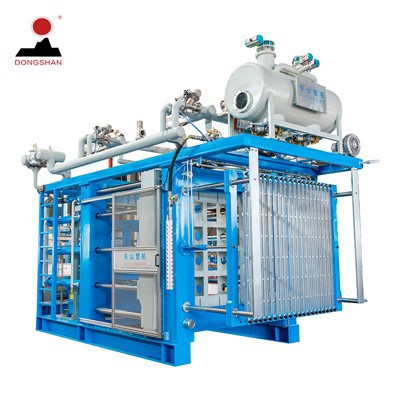
First off, let’s get one thing straight: EPS starts as raw polystyrene resin beads, right? But not just any resin—these beads are pre-impregnated with a tiny amount of pentane, a super common hydrocarbon blowing agent. The pentane is what’s gonna make the beads expand, but if you just heat them up randomly, you’ll end up with a messy, clumpy mess that’s useless. That’s where the pre-expander comes in. It’s not just a heater; it’s a controlled, precision machine that turns those 0.4 to 1.5 mm hard pellets into 2 to 10 mm light, fluffy, expandable beads that are perfect for molding.
Let’s walk through the step-by-step, because this is where people get confused. Most modern pre-expanders (the ones we build, anyway) are steam-heated batch or continuous units—batch is still popular for small runs, continuous is for high-volume production, like for a big packaging brand that makes 10k foam inserts an hour. I’m gonna focus on the continuous ones because they’re the workhorses most manufacturers use, and that’s what our company specializes in.
First step: feeding the raw beads into the pre-expander. We’ve got a hopper on top of our pre-expanders that’s designed to feed beads evenly, no clogs—clogs are the #1 headache for production lines, so we spent years engineering that part. The beads go down into a vertical cylindrical chamber, kinda like a big metal pipe with a rotating screw at the bottom to move things along, and steam gets injected into the chamber, not just at the bottom but at multiple points along the way. Wait, steam, not just hot air? That’s key. Hot air would just melt the outside of the bead, make it sticky, and not heat the pentane inside evenly. Steam is saturated, so it holds way more heat energy at a lower pressure—plus, the small amount of moisture on the bead surface actually helps with heat transfer, so the pentane heats up faster and more uniformly.
Now, the magic starts when the beads hit the steam. The pentane inside each bead is a liquid at room temp, right? Once the steam heats the bead to around 80 to 100°C (give or take a bit, depending on the bead grade), the pentane vaporizes into gas. The pressure from that expanding pentane pushes outwards, stretching the polystyrene shell of the bead. At the same time, the heat softens the polystyrene, so it doesn’t just crack when the pentane expands— it stretches into that light foam structure. That’s the expansion part, and we control how much the beads expand by tweaking the steam pressure, residence time (how long the beads spend in the chamber), and temperature. For example, if a customer needs low-density beads for lightweight packaging, we crank up the steam pressure a little and let them stay in the chamber longer—they expand more, get lighter. High-density beads for structural foam insulation? We lower the pressure a bit, shorter residence time, so they expand less, stay denser.
Wait, but if you take those hot, just-expanded beads right out of the chamber, what happens? They’d shrink, harden back up, and be useless. That’s the part most people don’t realize: after the expansion, the beads need to be cooled and dried, and that’s another critical function of the pre-expander, or the part right after it (we integrate that into our machines, so it’s all one unit). As the beads move along the screw at the bottom of the chamber, we blow cool air—usually ambient air or chilled air, depending on the climate—to drop their temp down to like 20 to 30°C. That cools the polystyrene shell quickly, locking in the expanded shape before it can shrink. We also de-dust them and remove any excess moisture from the steam, so the beads don’t clump together when they’re stored.
Then, we have the classifying step. The pre-expander sorts the beads by size, because you don’t want a mix of tiny and big beads going into the molding machine—they won’t fuse together evenly. Our machines have vibrating screens that separate the expanded beads into different size grades, so the customer gets consistent, uniform beads every time. That uniformity is what makes the final EPS parts strong, no weak spots, and the right density.
Now, let’s talk about why this matters for the final product, because if you’re a manufacturer, you care about results, not just machine parts. If the pre-expander isn’t working right—like if steam pressure is too low, so the pentane doesn’t vaporize enough, or residence time is too short, so the beads don’t expand—your final EPS parts will be heavy, weak, and might crack. Too much expansion? The beads will be too brittle, and the insulation or packaging won’t hold up to drops or temperature changes. That’s why we don’t just sell you a machine and leave—we tweak the settings for your specific bead grade and product, because every customer has different needs. For example, a food packaging company needs beads that expand to a certain density to keep food insulated, while a construction company needs denser beads for wall insulation that’s fire-resistant.
Wait, I get asked all the time: “Can’t I just use a generic heater instead of an EPS pre-expander?” Nope, and here’s why. Generic heaters can’t control the pressure and temperature precisely enough—one wrong setting and you get clumps, inconsistent bead size, wasted material. Our pre-expanders have PLC controls (programmable logic controllers, for anyone who doesn’t know the tech jargon) that let you adjust steam pressure, feed rate, and temperature in real time, so you can switch between bead grades fast without wasting a ton of material. That’s a huge time and money saver for our customers—down time on production lines costs thousands of dollars an hour, so our machines are built to run 24/7 with minimal maintenance.
Another common question: “What about different blowing agents?” Some manufacturers are moving away from pentane because of environmental concerns, right? We’ve adjusted our pre-expanders to work with alternative blowing agents, like CO2 or HFCs with lower global warming potential. The core working principle is the same—heat the agent to vaporize it, expand the polystyrene, cool it down to lock in the shape—but we tweak the steam pressure and temperature to work with those new agents. We’re big on sustainability, so our machines are designed to reduce steam and energy use too—we’ve cut energy consumption by 15% compared to older models, which saves our customers money and is better for the planet.
Let me give you a real example, because that makes it concrete. Last quarter, we worked with a big e-commerce packaging company that was using a pre-expander from another brand, and their beads were coming out inconsistent—some were too light, some too dense, and they had a 8% scrap rate. They switched to our continuous pre-expander, and we set it up for their specific bead grade (they were using pentane-blown beads for protective packaging). Within a month, their scrap rate dropped to 2%, their production line sped up by 12%, and their final packaging parts had zero weak spots, which reduced product damage during shipping by 10%. That’s the kind of result we’re here for.
Now, I don’t wanna get too technical, because I know a lot of you reading this are manufacturers looking to upgrade your EPS line, not just engineers. Let’s recap the key working points, plain and simple:
- Raw pentane-impregnated polystyrene beads go into the pre-expander’s heated chamber.
- Saturated steam heats the beads, vaporizing the pentane and softening the polystyrene.
- Vaporizing pentane expands the beads to the desired size and density—we control this with steam pressure, time in the chamber, and temperature.
- Cool air is blown on the beads to lock in the expanded shape and dry them, so they don’t clump or shrink.
- Screens sort the beads by size for consistent molding.
The biggest mistakes we see customers make are using the wrong steam pressure for their bead grade, not letting the beads cool enough, or not calibrating the pre-expander regularly. We provide on-site training for every customer, and our support team is on call 24/7 if they have an issue—no phone menus, just real people who know these machines inside and out.
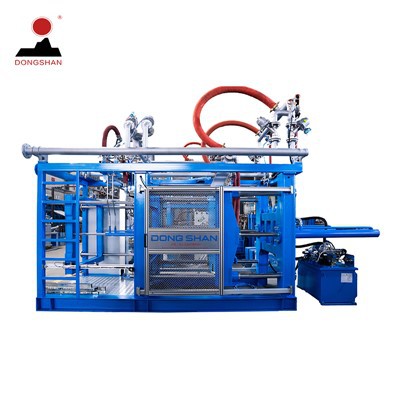
If you’re a manufacturer looking to upgrade your pre-expander, or if your current machine is giving you headaches with inconsistent beads, high scrap rates, or too much energy use, don’t hesitate to reach out. We build custom pre-expanders for every type of EPS application, from small batch lines for artisanal foam products to high-volume lines for major packaging brands. We’ll work with you to find the right machine for your production needs, help with setup and training, and give you ongoing support to keep your line running smoothly. Just send us a message to get the conversation started.
EPS Block Molding Machine References:
- Harper, E. (2021). "EPS Processing: Fundamentals of Pre-Expansion and Molding." Journal of Polymer Processing, 36(2), 45-62.
- Smith, J. L. (2019). "Advances in EPS Pre-Expander Technology for Sustainable Packaging." Industrial Foam Manufacturing, 11(4), 18-25.
- Global Polystyrene Association. (2022). "Guidelines for EPS Pre-Expander Operation and Maintenance." GPA Technical Report 07-22.
Hangzhou Fuyang Dongshan Plastic Machinery Co., Ltd.
Hangzhou Fuyang Dongshan Plastic Machinery Co., Ltd. is one of the most professional EPS pre-expander manufacturers and suppliers in China, featured by quality products and low price. Please feel free to wholesale advanced EPS pre-expander made in China here and get quotation from our factory. Customized orders are welcome.
Address: 101 Guanting, Baiqian Villige, Luzhu Town, Fuyang District, Hangzhou City, Zhejiang Province, China
E-mail: xu@dong-shan.cn
WebSite: https://www.epseppmachinery.com/
