If you’ve spent any time on a CNC thread milling floor, you know that the difference between a smooth, production-run win and a messy, rework-heavy headache often comes down to one small, often overlooked tool choice. Last month, I stood in our shop’s bay three, watching a 12-hour production run for a aerospace hydraulic component grind to a halt—not because of a machine glitch or a material defect, but because a solid-carbide thread mill had chipped mid-cut, ruining 17 of 42 finished parts before we could hit pause. That same week, a customer who’d been insisting on solid-carbide cutters for every thread job called to ask if we stocked indexable thread milling heads; they’d just finished a 5,000-part job on automotive transmission housings with zero tool changes, a feat they’d previously only dreamed of with solid tools. That conversation is what made me decide to lay out, from a CNC thread milling supplier who’s seen every angle of this choice, exactly why indexable cutters aren’t just a “nice-to-have”—they’re often the difference between a profitable job and a losing one. CNC Thread Milling
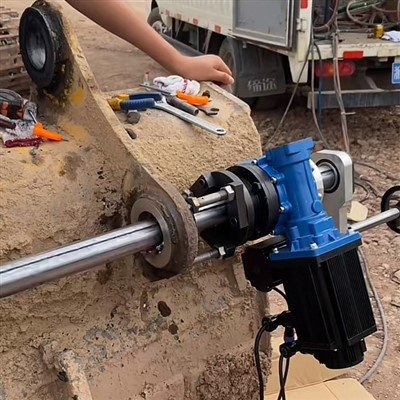
First, let’s cut through the confusion of what indexable thread milling tools actually are, because too many machinists I talk to lump them all in the same bucket as standard insert-style tools for turning or face milling. Unlike solid-carbide thread mills, where the cutting edge is a single piece of hardened carbide ground to a specific profile, indexable CNC thread milling systems use a tool holder (sometimes called a body) that accepts individual, replaceable inserts machined to the exact thread pitch, diameter, and profile you need. For anyone who’s ever fumbled through grinding a custom solid-carbide profile or waiting three days for a special order of solid thread mill because their job required an obscure M12 x 1.25 fine pitch on a 316L stainless steel component, this is a revelation. But the real benefits go far beyond convenience.
Let’s start with cost efficiency, because that’s the first question every production manager and machinist asks. I’ve done the math with hundreds of our customers, and the numbers never lie. Take that 5,000-part automotive transmission job I mentioned earlier: their original tooling setup was four solid-carbide thread mills, each costing $128, with each lasting roughly 600 parts on the 4140 hardened steel they were cutting. That meant they were spending over $1,000 in tooling alone for that run, plus downtime every 600 parts to swap out a tool and adjust the offset for a new cutter. Compare that to our indexable system for the same job: a single tool body for the thread milling operation cost $210, but the inserts only cost $18 each. Each insert lasted 1,250 parts—more than double the life of a solid-carbide cutter. For 5,000 parts, that works out to four inserts, totaling $72, plus the one-time cost of the tool body. Even if you amortize the tool body over 10 jobs, the total tooling cost dropped by more than 80%. That’s not a small saving; on a job that typically has razor-thin margins, that difference can make the between taking the work and walking away from it.
But cost isn’t the only angle here. What about flexibility? Let’s say you’re running a contract machining shop that takes on a mix of jobs: one week you’re making M6 x 1.0 threads on aluminum brackets for a furniture manufacturer, the next you’re doing M20 x 2.5 coarse pitch threads on titanium aerospace lugs, and the week after that you have a custom job calling for 7/16”-18 UNJF threads on polycarbonate housings for medical devices. With solid-carbide thread mills, you need a separate cutter for every single thread size, pitch, and material. Keep 15 different solid cutters in your tool crib, and suddenly you’re spending thousands of dollars just to cover your common jobs, plus waiting for custom-sized solid tools that can take a week or more to arrive when a new job comes in. With indexable cutters, you just need a few tool bodies—we carry four standard bodies that cover every thread size from M2 up to M36, and all our inserts are interchangeable across those bodies. A single insert for M6 x 1.0 aluminum is $12, an M20 x 2.5 titanium insert is $22, and a UNJF 7/16”-18 insert for polycarbonate is $14. That means you can cover 20 different thread profiles with less than $500 worth of inserts, plus your tool bodies. And if a job calls for a custom thread profile that no solid cutter is stocked for? We can grind a custom insert for you in 48 hours, not three weeks for a special solid tool. I had a customer last year in the agricultural equipment space who was making a custom hydraulic fitting with a 1.5mm pitch metric ACME thread—they’d been waiting two weeks for a solid-carbide custom tool that cost $380, and we had a custom insert for their indexable body ready in 48 hours for $45, with better thread quality to boot. That kind of flexibility isn’t just nice—it’s what lets small shops take on jobs they’d otherwise have to turn away.
Next, let’s talk about performance, because too many machinists assume that solid-carbide, being a single piece of tool material, is more stable and produces a better thread. That’s a misconception, and it’s one we’ve proven time and again in our own test cell. Solid-carbide thread mills have a fixed geometry, so if there’s even a tiny imperfection in the grinding of the tool, or if it’s been nicked during a previous job, that flaw gets repeated every single cut. With indexable inserts, every cutting edge is precision-ground to a consistent profile—we hold our insert tolerances to within 0.001mm, which is tighter than the tolerance most solid-carbide tools can achieve, even with specialty grinding. That consistency translates directly to thread quality. We had a medical device customer recently who was producing hip implant locking tabs that required 100% perfect threads to avoid any risk of loosening. They were using solid-carbide tools and were rejecting about 2% of parts due to inconsistent thread pitch and minor taper from tool wear. After switching to our indexable thread milling system, that rejection rate dropped to 0.1%—because every new insert is perfectly ground to the same profile, and when an insert does wear, you just swap it out, not try to adjust offsets for a worn solid tool that’s already changed geometry.
Then there’s tool longevity and wear management, which ties back to performance but deserves its own section. Solid-carbide thread mills have a set lifespan, and once the cutting edge starts to wear, the quality of the thread degrades quickly. You might get 100 parts from a solid tool, but by the 80th part, the thread is already starting to show minor signs of tear, especially in materials like stainless steel or titanium. With indexable inserts, each insert has multiple cutting edges—wait, yes, that’s another huge benefit most people don’t mention: most of our thread milling inserts have 4 to 6 separate cutting edges on a single insert body. So each insert is effectively four or five solid cutters in one. When the first edge wears, you just index the insert to expose a new, sharp edge, no need to change the insert entirely. That not only extends the life of each insert by 400-600% compared to a solid tool, but it also means you can go much longer between tool changes, reducing downtime. For high-volume jobs, that’s a game-changer. Take that 5,000-part transmission job again: the customer was changing solid tools every 600 parts, which meant four tool changes over the run, plus setting offsets and verifying thread quality after each change. With indexable inserts, they index the insert once every 1,250 parts, so only four index operations, no new tool bodies or offset adjustments. That cut their cycle time for the entire job by almost two hours, which for a high-volume production run adds up to thousands of dollars in extra revenue.
There’s also the critical factor of material compatibility. Machinists know that different materials require different cutting geometries and coatings, and indexable systems are designed to let you swap those out in minutes, not days. For aluminum, we have inserts with a polished, sharp edge and a TiN coating that reduces built-up edge (BUE) on soft, gummy materials like 6061 aluminum. For stainless steel, we have inserts with a tough, negative rake angle and a TiCN coating that resists wear from high heat and material adhesion. For titanium, we use inserts with a specialized PVD coating and a polished cutting edge that minimizes heat buildup, which is a huge deal because titanium work-hardens so easily. Solid-carbide tools can come with these coatings too, but you’re stuck with that coating for the life of the tool. With indexable inserts, you can pick exactly the right coating and edge geometry for each material, without paying premium prices for a custom-coated solid tool. I once had a customer who was running a mix of aluminum, 304 stainless, and titanium in one month, on the same machine. They used to have to swap out their entire solid-carbide tool body every time the material changed, which took 20 minutes each time and meant they lost about two hours of production time that month. With our indexable system, they just swapped out the insert—five minutes, no need to adjust tool offsets or reprogram the machine—so that downtime was eliminated entirely. That’s another big efficiency gain.
But let’s be honest: no tool is perfect, and indexable cutters aren’t the right choice for every job. We’ve had customers come to us wanting indexables for a job where they’re cutting a single M3 thread on a small batch of 10 prototype parts, and that doesn’t make sense—solid-carbide tools are cheaper for very small, low-volume jobs where tool change and flexibility don’t matter. But for any job with more than, say, 50 parts, or any high-mix production environment where you’re running multiple thread jobs a day, indexable cutters will almost always outperform solid-carbide tools. The key is matching the tool to the job, and that’s where we come in as a CNC thread milling supplier—we don’t just sell tools; we work with our customers to figure out which setup will save them the most money, reduce downtime, and produce the highest quality parts.
A few years ago, we had a start-up aerospace component manufacturer reach out to us, panicking because they had a 10,000-part job for NASA that was due in 6 weeks, and their solid-carbide thread mills were failing mid-cut, ruining parts and pushing them behind schedule. They were working with a different supplier who had told them indexable tools weren’t accurate enough for aerospace applications, which is why they’d chosen solid tools in the first place. We brought in our test cell engineer, ran a sample part with our indexable system on their 6Al-4V titanium material, and found that the thread tolerance was within ±0.002mm—well within the requirements for their NASA contract. They switched over, finished the job on time, and came back to us for every subsequent CNC thread milling job they’ve had, now 12 contracts later. That’s the kind of partnership we value: not just selling a product, but proving that the right tool choice can make or break a critical job.
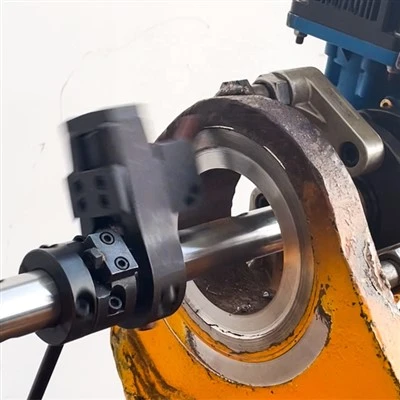
If you’re currently using solid-carbide thread mills for most of your jobs, or if you’re tired of dealing with high tooling costs, frequent downtime from tool changes, and inconsistent thread quality, we can help. Our team has years of experience working with every type of CNC machine, material, and thread specification, and we’ll help you design a setup that works for your specific production needs. We don’t believe in a one-size-fits-all approach, so we’ll walk through your current job challenges, compare the performance and cost of indexable vs. solid-carbide tools, and make recommendations that will help you increase profitability and efficiency. If you’re ready to stop wasting money on overpriced solid-carbide tools that wear out too fast and start reaping the benefits of indexable thread milling, reach out to our team to set up a time to discuss your projects. We’re here to help you find the right tooling solution for your operations, no matter the size of your shop or the complexity of your jobs.
Facing Head References
- Machining Data Handbook. Indexable Thread Milling: Tool Geometry and Performance. 2021
- SME (Society of Manufacturing Engineers). Cost-Benefit Analysis of Indexable vs. Solid-Carbide Thread Milling Tools. 2022
- ASME B1.13M, Metric Screw Threads for Aerospace Applications. Thread Tolerance Requirements for CNC Machining. 2020
- Tooling Magazine. High-Volume Production Efficiency: Indexable Insert Tooling in CNC Machining. 2023
Shangqiu JDA Machinery Technology Co., Ltd.
With abundant experience, we are one of the most professional cnc thread milling manufacturers and suppliers in China. We warmly welcome you to buy cheap cnc thread milling for sale here from our factory. Quality products and reasonable price are available.
Address: No. 55 Pingyuan Middle Road, Liangyuan District, Shangqiu, Henan, China
E-mail: sales@jdamachines.com
WebSite: https://www.jdamachines.com/
