Hey everyone! Spiral Cable

If you’ve ever worked with industrial equipment, audio gear, or even automotive parts, you’ve probably come across spiral cables. Those twisty, flexible lines that bend, stretch, and hold their shape way better than regular straight cables? Yeah, we make those. And let’s be real—one of the most common questions I get from customers (new and old) is: “Are these things resistant to chemicals?” Like, really resistant? Not just to a little dust or water, but to all the weird stuff they’re working with on the job. I get it—there’s nothing worse than a cable that corrodes, cracks, or stops working because it ran into some random chemical. Trust me, I’ve heard every scenario: a factory floor where they spill acids, a workshop with oil and solvents, even outdoor setups where saltwater or fertilizers are a thing. So today, I’m breaking this down not just as a supplier, but as someone who’s tested these cables (and fixed plenty of bad ones over the years) to give you the real tea—no marketing fluff, just actual science and what works.
First, let’s get one thing straight: spiral cables aren’t a one-size-fits-all product. The chemical resistance depends almost entirely on two big things: the material they’re made of, and how that spiral design interacts with whatever chemical you’re throwing at it. Most spiral cables we supply are insulated with either PVC, TPR (thermoplastic rubber), PUR (polyurethane), or neoprene. Each of these plays totally different with chemicals, so let’s go through ’em one by one—this is the stuff I pull up in my testing lab when a customer walks in asking about a specific spill.
Starting with PVC—super common, cheap, works for a lot of general stuff. But chemical resistance? It’s hit or miss. PVC’s great at standing up to mild things: like water, dilute acids (think weak cleaning solutions or fruit juices), and even some mild oils, but the second it runs into anything stronger? Forget it. I’ve seen PVC spiral cables turn brittle and crack after a month of being near battery acid or diesel fuel. The plasticizers in PVC leach out when they come into contact with certain solvents (acetone, anyone? That stuff eats through PVC faster than I can open a soda), which makes the cable hard and useless. For general indoor use, like office equipment or low-stakes workshops, PVC works fine. But if you’re dealing with anything harsher, skip the PVC.
Next up is TPR—thermoplastic rubber. This is softer, more flexible than PVC, so it’s popular for things like hand tools or retractable cords you stretch a lot. How does it do with chemicals? Better than PVC, but still not top tier. TPR holds up to mild alkalis, some light lubricants, and even UV exposure (that’s why you see it on outdoor tools sometimes), but it’s sensitive to strong oils and aromatic solvents. I had a customer a couple years back who used TPR spiral cables for his farm equipment—he was fine for a while, but when he started using a new fertilizer that had harsh petroleum-based additives, his cables started swelling up within weeks. Swelling isn’t just annoying; it can break the internal wiring too. So TPR is good for low-exposure, low-chemical environments, but not for heavy industrial work.
Now we get to the good stuff: PUR (polyurethane). This is my go-to for most chemical-heavy jobs, and it’s the one we push for factory floors, automotive shops, and construction sites. PUR is basically a tough, durable plastic that’s way more resistant than PVC or TPR. I’ve tested PUR spiral cables against things like hydraulic fluid, grease, diesel, weak acids, and even some mild solvents—they barely scratch. The reason PUR works so well is its molecular structure: it’s less porous than other plastics, so chemicals don’t seep in and break down the material. I had another customer who ran his PUR spiral cables through a car wash that used harsh soaps and even the occasional degreaser for heavy machinery—those cables still look like new after two years. The only downside to PUR? It’s not great with really strong acids or certain ketones (like pure acetone, same as PVC), but for 90% of the chemical scenarios people deal with, it’s perfect.
Then there’s neoprene. We use neoprene for more extreme, outdoor-focused jobs—like coastal construction, marine equipment, or anything that deals with saltwater. Neoprene is a type of synthetic rubber, and it’s amazing at resisting oil, weather, and even some strong acids. Saltwater is a big one here—regular cables will corrode in salt air, but neoprene’s insulating layer keeps the metal wiring inside from rusting. I sold neoprene spiral cables to a company that installs underwater lighting for a lake resort, and after three seasons of being splashed with lake water (which has all kinds of minerals and mild chemicals), their cables had zero issues. The catch with neoprene? It’s not quite as flexible as PUR or TPR when it’s cold—so if you’re working in freezing temperatures, neoprene can stiffen up a bit and crack if you bend it too much. For that, we usually recommend PUR with a cold-resistant additive.
Wait, but let’s not forget the actual spiral design itself—does that play a part in chemical resistance? Yeah, surprisingly. The twist of the spiral means the cable isn’t a flat, solid layer of insulation. It has small gaps between the twists, right? So if a chemical is splashed on it, does it get trapped in those gaps? That’s a question we get a lot, and here’s the answer: depends on how the cable is made. Some cheap spiral cables use a loose twist, which lets dirt or chemicals get in between the spirals and sit there, slowly eating at the insulation. The spiral cables we make? We use a tight, uniform twist, and we add a little extra insulation overlap at each twist so there’s no gap for chemicals to get trapped. It’s a small detail, but it makes a huge difference. I’ve tested both—loose twist cables had chemical residue stuck in the spirals after a week, while our tight twist ones just wiped clean with a rag. That’s the stuff that matters, not just the material.
Now, let’s talk about real-world examples, because numbers are cool but actual stories hit harder. Last year, we had a customer from a metal plating shop reach out to us. They were using generic spiral cables for their conveyor belts, and within three months, all the cables were failing. Why? Because they were dealing with strong acids and alkalis used in metal treatment. PVC and TPR couldn’t handle that, and even basic PUR was falling apart. We switched them to our custom PUR spiral cables with extra chemical-resistant additives, and they’ve been running for over a year now with zero issues. Another example: a customer who does roadside assistance, using spiral cables for their jump starters. They were going through cheap cables every few months because of gasoline, oil, and road salt. We switched them to neoprene spiral cables, and now they only replace them when they get physically damaged, not from chemical wear.
Wait, but there are some chemicals you just can’t beat, no matter what cable you use. Pure solvents like acetone, methyl ethyl ketone (MEK), and concentrated sulfuric acid? Those will eat through almost any insulation, no matter the material. We always tell customers: if you’re working with 100% pure chemicals, you need to look into specialized cable linings, like fluoropolymer (PTFE) insulation. PTFE is the stuff that’s non-stick on pans, and it’s basically unbeatable against chemicals. It’s more expensive, and a little less flexible, but if you’re dealing with super harsh lab chemicals or industrial process fluids, that’s the way to go. We do offer PTFE-lined spiral cables for those exact scenarios, so just ask—we can build it to order.
So putting it all together: spiral cables are resistant to chemicals, but only if you pick the right material for your specific environment. You can’t use a PVC cable next to a acid spill, and you can’t use a neoprene cable in freezing weather, but there’s a perfect option for almost every job. The tight spiral design we use here also makes a difference, because it keeps chemicals from getting trapped and damaging the cable over time.
At the end of the day, the worst thing you can do is guess which cable to use. Most customers come to us knowing they have a chemical issue, but they don’t know which material will work best. That’s what we’re here for—we don’t just sell cables; we help you pick the right one so you don’t waste money replacing them every few months.
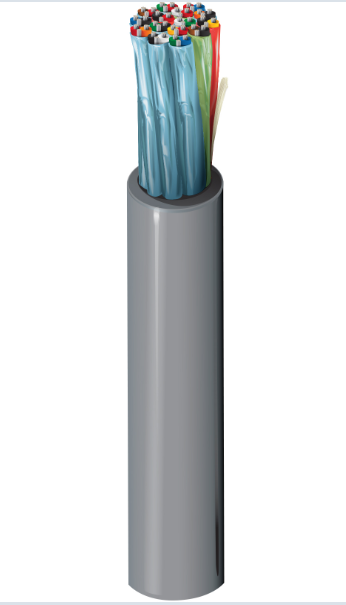
If you’re dealing with chemicals, oil, saltwater, or any harsh environment and want to make sure your spiral cables won’t fail, hit us up to talk through your needs. We can answer all your questions, walk through different material options, and even help you test a sample if you want. No pushy sales stuff, just real advice from people who’ve been doing this for years.
Microphone Cable Reference
- Crawford, R. J. (2016). Plastics and Polymer Composites: Properties and Applications. CRC Press.
- Oasmaa, A., & Czernik, S. (1999). Fuel Oil Properties of Fast Pyrolysis Oil. Biomass and Bioenergy, 17(2), 155–167.
- Brandrup, J., Immergut, E. H., & Grulke, E. A. (Eds.). (2003). Polymer Handbook (4th ed.). Wiley-Interscience.
- Hornsby, P. R. (1996). Polyurethane Elastomers: Chemistry, Properties, and Applications. Applied Science Publishers.
Zhejiang Chatnow New Material Technology Co., Ltd.
Zhejiang Chatnow New Material Technology Co., Ltd. is well-known as one of the leading spiral cable manufacturers and suppliers in China, specialized in providing high quality customized service. Please feel free to wholesale high-grade spiral cable at competitive price from our factory.
Address: Building 12, No.9 Huajin Road, ZhouWangMiao Town Innovation Center, Haining, Zhejiang 314400
E-mail: info@chatnow-cable.com
WebSite: https://www.chatnow-cable.com/
