If you’ve ever stood on the floor of an automotive parts plant during a shift change, watching pallets of relays move toward assembly lines only to stack up at bottlenecks, you know production cycle time isn’t just a metric—it’s the difference between meeting a client’s JIT deadline and missing it, between keeping your line operators productive and burning them out on unnecessary wait times. For my team, a supplier that designs and builds custom automotive relay production lines, cycle time optimization isn’t an abstract theory—it’s the core of what we do. Over 12 years of working with 30+ OEMs and tier-1 suppliers across North America and Europe, we’ve seen the same mistakes sink even well-intentioned production setups. Today, I want to pull back the curtain on the actionable, proven steps we use to cut cycle times without sacrificing the precision or reliability automotive relays demand. Automotive Relay Production Line
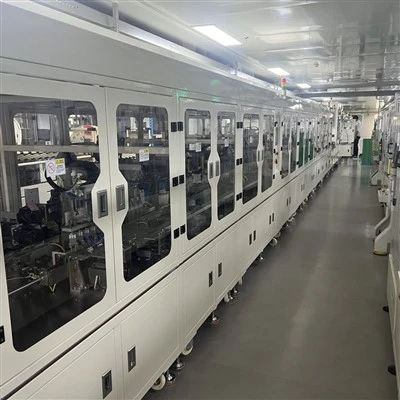
First, let’s ground this in what automotive relays actually require, because you can’t optimize a process if you don’t know its unique constraints. Unlike consumer electronics relays, which sometimes cut corners on contact durability, automotive relays are built to withstand 100,000+ switch cycles, temperature swings from -40°C to 125°C, and shock from road vibration. That means every component—from the copper contact blades to the plastic housing to the spring mechanism—needs to be aligned, crimped, and tested with micron-level precision. A misaligned contact, a slightly off crimp, or a skipped durability test doesn’t just cause a delay; it can result in a defective part that gets installed in a brake system or powertrain, leading to recalls that cost millions. So cycle time optimization here is a balancing act: you can’t rush the critical quality checks, but you can eliminate the wasted motion and downtime that add 10, 20, even 30 seconds to every unit’s production without adding value.
The biggest culprit we see in underperforming relay lines is unaddressed bottlenecks. When we audit a client’s existing line, we start with value stream mapping (VSM)—not the spreadsheet version, but a hands-on walk of every station, clocking every task, and talking to the operators who run the line. Last year, we worked with a midwestern tier-1 supplier that was running a line for 40A power relays at 12 seconds per unit, way above their target of 8 seconds. Their VSM showed that the contact crimping station was processing a part every 7 seconds, but the adjacent housing insertion station was only waiting for a crimped part 3 seconds per cycle. That looked like a bottleneck at crimping—until we looked closer. The crimping machine was stopping 12 times per hour for minor jams, because the parts feeder was vibrating too much, sending two contact blades at a time into the chute. The insertion station was idle not because it was slow, but because the crimping station was inefficient. Instead of speeding up the crimping machine (which would have risked misalignment and defects), we re-tuned the feeder to send one blade at a time, added a small sensor to detect dual feeds, and trained the operators to clear jams in under 10 seconds instead of the average 25. That cut crimping time by 2 full seconds per unit, pushed the line to 9 seconds per unit on the first day, and got them to 8.2 seconds within a month, with zero increase in defect rates. The key here: bottlenecks aren’t always at the slowest station—they’re at the station that creates downtime that ripples through the whole line. The only way to find them is to ask the people who run the line. Operators don’t care about metrics on a wall; they care about the jams that take 20 minutes to clear, the parts that get lost in a bin, and the tasks that force them to walk 50 feet to get tools. We never skip the frontline interviews in our audits.
Next, standardize setup and changeover times, because automotive lines rarely run just one product forever. A line producing a 12V starter relay this month will need to produce a 24V powertrain relay next month, or a low-current interior relay the quarter after. Traditional changeovers—where operators manually swap tooling, adjust settings, and recalibrate machines—can take 45 minutes to two hours per product, eating into 10% of monthly production time. We developed a modular tooling system specifically for relay lines that cuts changeover time by 70% or more. Here’s how it works: every station that handles unique tooling (like crimping dies, housing locators, or contact feeders) has quick-disconnect mounts and pre-calibrated modules. When changing over from Product A to Product B, an operator doesn’t need to adjust 12 different settings on the crimping machine; they swap a single pre-calibrated die module in 90 seconds, and a touchscreen interface pulls up the exact set parameters for the new product, so the machine self-adjusts instead of requiring manual testing. At another client in Germany, this changeover cut their monthly lost time from 12 hours to 3.5 hours, allowing them to take on a new client’s order without adding a second shift. The catch here: modular tooling requires upfront investment, but the ROI is almost always less than six months for mid-to-high volume lines. We’ve seen too many clients skimp on this to save a few dollars, only to lose thousands in production time and missed deadlines when product changes come up.
Then, implement error-proofing (poka-yoke) for every step, because rework is one of the biggest cycle time killers in relay production. A single defective part that’s caught at final testing doesn’t just waste the parts and labor put into it—it means the downstream stations (housing insertion, sealing, testing) have to wait for a good part, or the line has to stop to rework the unit. We’ve seen lines where rework takes 15% of total cycle time, just because a small step like checking that the contact is seated properly wasn’t automated. For example, we added vision inspection systems at two key points: after contact crimping, to verify the blade is at the exact height required, and before housing insertion, to make sure no foreign material (a tiny copper shard, a dust particle) is in the housing. If either check fails, the part is automatically diverted to a rework bin before it hits the next station, so the line doesn’t have to stop. At a client in Mexico, this reduced rework time from 12% to 2% and cut cycle time by 1.5 seconds per unit, because operators no longer had to sift through 10 reworked parts every hour. It’s not just about quality—error-proofing directly reduces cycle time by eliminating the wait and rework caused by human error, which is responsible for most defects in relay lines.
Another often-overlooked area is workflow and material handling. Even if every machine is running at peak efficiency, if parts are sitting in bins waiting to be moved to the next station, you’re losing time. For relays, which are small, lightweight, and have sensitive components, material handling needs to be precise and fast, not clunky. We switched a client’s line from using large, wheeled bins to stacked, narrow tote bins that fit exactly on each station’s output shelf, with RFID tags that track how many parts are in each tote. When a tote at Station 1 is full, a small automated guided vehicle (AGV) pulls the empty tote from Station 2 and replaces the full one in 30 seconds, instead of having an operator walk over with a hand truck and swap them every 10 minutes. We also reduced the distance between stations from 3 feet to 1 foot, using custom, low-profile conveyors that don’t block operator access. This might sound small, but when you add up the time saved per station, it cut the line’s total cycle time by 2 seconds per unit. The rule here: parts should never sit more than 10 seconds between being made and being moved to the next step. If a station is producing a part faster than it can be moved, adjust the material flow, not the machine speed.
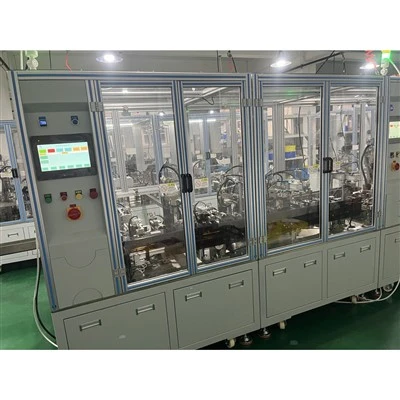
Finally, implement predictive maintenance, not reactive maintenance. A machine breakdown on a relay line can take 30 minutes to clear, and if it’s the crimping machine, that downtime ripples through every station. Reactive maintenance—fixing a machine after it breaks—costs 2-3 times more than proactive maintenance, and it’s way worse for cycle time. We pair each production line with a sensor suite that monitors machine vibration, temperature, and cycle count in real time. For example, the crimping die wears out over time, and sensors detect a slight increase in vibration before it causes misaligned contacts. The line’s maintenance team gets an alert 20,000 cycles before the die needs to be replaced, so they can swap it during a scheduled break instead of during production. At a client in the U.K., this reduced unplanned downtime by 85% and cut average cycle time by 1 second per unit, because there were no unexpected stops mid-shift. We also train our clients’ operators to do basic maintenance checks—like cleaning the feeders and checking for loose screws—during their breaks, so small issues don’t turn into big ones.
Ball Screw Linear Modules I’ll be honest: optimizing production cycle time isn’t a one-time project. It’s an ongoing process, because product designs change, operators learn new tricks, and machines wear out. What works for a line producing starter relays won’t work for a line producing interior relays, and what works this year will need tweaks next year. That’s why we don’t just sell a line and walk away—we provide ongoing support, monthly audits, and training to help our clients keep their lines running at peak efficiency. If you’re struggling with cycle time delays, rework, missed deadlines, or changeover headaches, we can work with you to audit your existing line (even if it’s not one we built) or design a custom line that’s built for speed, quality, and flexibility. The automotive industry doesn’t have time for lines that underperform—every second counts, and every relay has to be built to last. Let’s talk about how we can help you optimize your production cycle time to meet your goals.
References
- Toyota Motor Corporation. (1992). Toyota Production System: Beyond Large-Scale Production. Productivity Press.
- Groover, M. P. (2019). Automation, Production Systems, and Computer-Integrated Manufacturing (5th ed.). Pearson Education.
- Automotive Industry Action Group (AIAG). (2021). Advanced Product Quality Planning (APQP) and Control Plan. AIAG.
- Riggs, J. L., & Robbins, S. (2018). Production Systems: Planning, Analysis, and Control (6th ed.). John Wiley & Sons.
- Staudenmann, J., & Netland, T. (2020). “The Hidden Costs of Unplanned Downtime in Discrete Manufacturing Lines.” Journal of Operations Management, vol. 66, no. 7, pp. 821–839.
Yangning (Xiamen) Intelligent Technology Co., Ltd.
With abundant experience, we are one of the most professional automotive relay production line manufacturers in China. As we have world-leading production equipment and strong manufacturing capabilities, we warmly welcome you to buy bulk advanced automotive relay production line from our factory. Customized orders are welcome.
Address: Room 307-2, No. 15 Duiying Road, Software Park Phase III, Torch Hi-Tech Zone, Xiamen, Fujian, China
E-mail: mia@ynautos.com
WebSite: https://www.ynautos.com/
